
Spring Drive: Inside Grand Seiko’s Hybrid Movement That Changed Watchmaking
For most of the twentieth century, watch movements fell into one of two clear camps. A watch was mechanical, driven by a wound mainspring and regulated by a balance wheel and escapement, or it was quartz, powered by a battery and steered by a vibrating crystal. There was no middle ground. Then in 1999, Seiko released a movement that quietly refused to choose. It was called Spring Drive, and twenty-five years on it remains one of the most genuinely original horological inventions of the modern era.
Spring Drive is not a mechanical caliber with a quartz gimmick bolted on, and it is not a quartz movement pretending to be mechanical. It is a third category. The energy is stored and delivered exactly like a traditional mechanical watch, through a mainspring and a gear train, but the regulation system is something the rest of the industry had never attempted. Seiko calls it the Tri-synchro Regulator, and understanding how it works is the key to understanding why this caliber feels the way it does on the wrist.
How Spring Drive Actually Works
The story begins in 1977 at Suwa Seikosha, now part of the Seiko Epson group, where engineer Yoshikazu Akahane sketched out an idea that seemed almost heretical at the time. He wanted to use the energy stored in a mainspring to drive not a balance wheel but a tiny generator, and then use the electrical signal from that generator to regulate a quartz crystal. The mainspring would supply the power. The quartz crystal would supply the time. Everything in between would be a hybrid.
It took twenty-two years to turn that sketch into a commercial product. The first Spring Drive caliber, the 7R68, debuted in 1999 inside a Credor case. From a distance, a Spring Drive watch looks entirely conventional. Inside, however, three subsystems work in continuous conversation with each other.
The first is the energy source. A conventional mainspring sits inside a conventional barrel, and the watch is wound either by an automatic rotor or by hand, depending on the caliber. Nothing exotic there. The barrel drives a conventional mechanical gear train that turns the hands.
The second subsystem replaces the escapement. Instead of a balance wheel oscillating back and forth, the gear train is interrupted by what Seiko calls a glide wheel, a small rotor that would, if left alone, simply spin at whatever speed the mainspring allowed. Its job is not to tick. It is to turn, and to be controlled.
The third subsystem does the controlling. The glide wheel drives a micro generator that produces a small electrical current. That current powers a quartz crystal oscillator, identical in principle to the one in any quartz watch. The quartz signal is read by an integrated circuit, which applies a magnetic field through an electromagnetic brake attached to the glide wheel. When the glide wheel turns too quickly, the brake grips harder. When it turns too slowly, the brake releases. The result is a phase-locked loop that holds the glide wheel at exactly 8 revolutions per second, the rate required to drive the seconds hand at one revolution per second.
This is the Tri-synchro Regulator. Three elements, synchronized in real time: the mechanical mainspring, the glide wheel, and the quartz reference. There is no battery to replace. There is no escapement to lubricate. There is no balance wheel to adjust with a regulator arm. The accuracy is set by the quartz crystal, and Seiko specifies the standard Spring Drive calibers at plus or minus one second per day, which puts them in the same league as premium dedicated quartz watches while still being powered by a spring.
The Smooth Seconds Hand
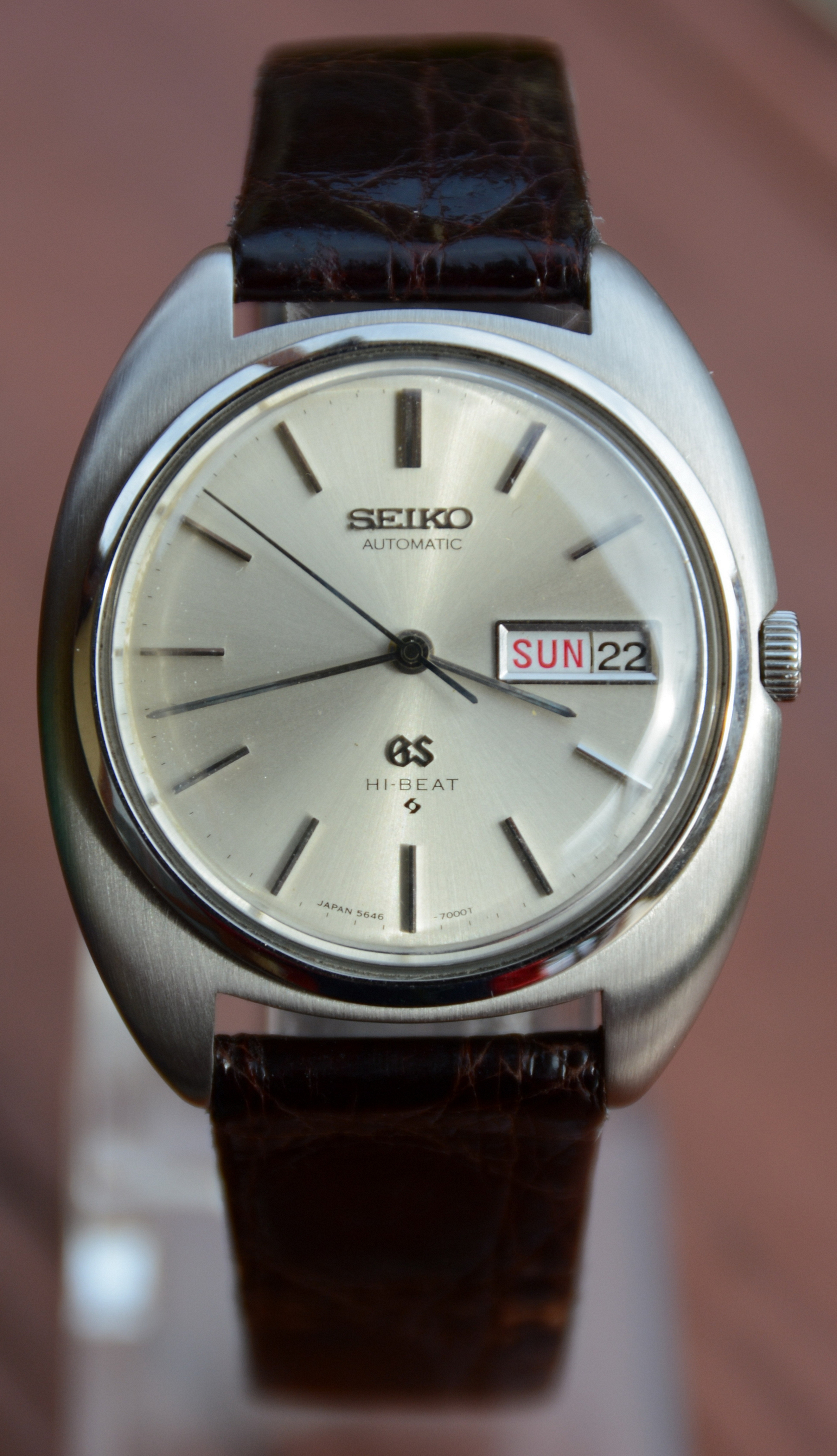
The first thing any Spring Drive owner notices is the seconds hand. Because the glide wheel is rotating continuously rather than oscillating, and because the brake is modulating that rotation rather than releasing it in discrete steps, the seconds hand does not tick. It sweeps. And it does not sweep in the slightly stuttering way of a high-frequency mechanical caliber, where the eye can still pick out individual beats. A Spring Drive seconds hand moves with the kind of frictionless glide that gives the dial an almost liquid quality.
This is the detail that catches people out. Onlookers assume they are looking at a quartz watch, because the hand appears motionless between glances, then they see it has moved, and they realize the watch is running but is not ticking. The visual signature is unmistakable once you know what to look for.
The Caliber Family
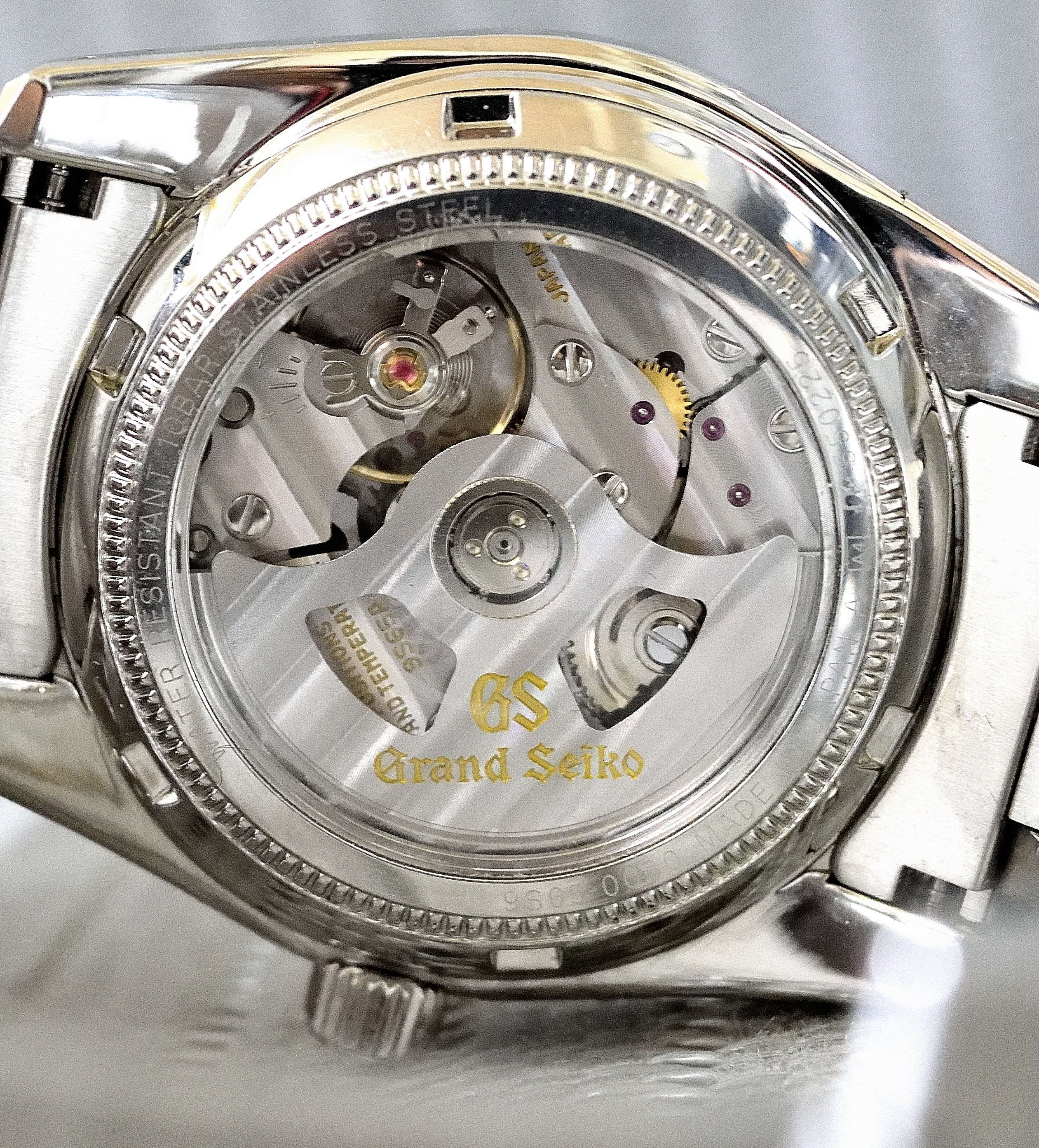
Spring Drive is not a single caliber. It is a platform, and Seiko has expanded it steadily since 1999. The modern lineup is built around the 9R series, produced at the Shiojiri manufacture in Nagano Prefecture.
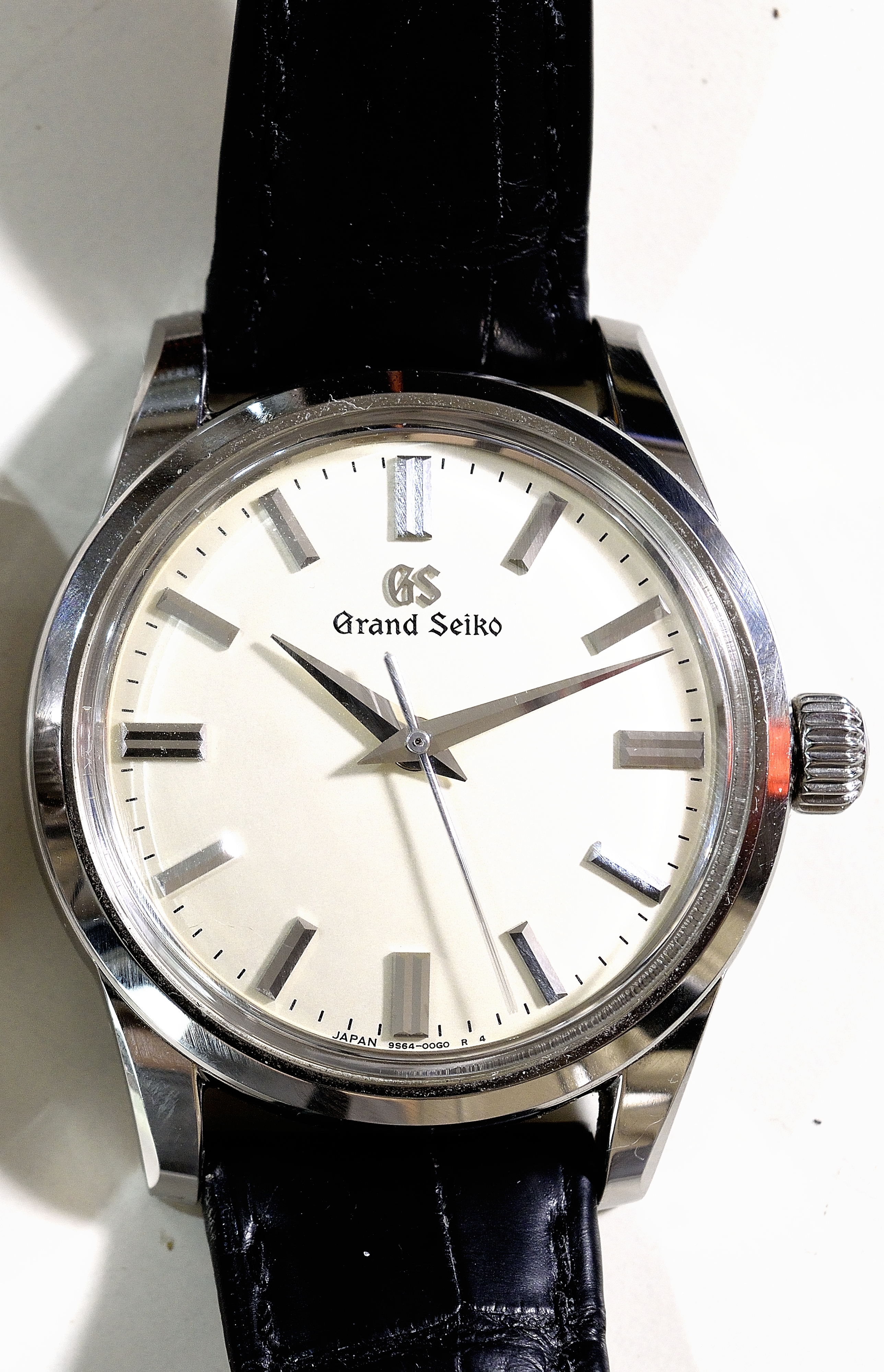
The workhorse is the 9R65, a 30-jewel automatic with date, used across the Grand Seiko SBGA and SBGR families, and in many Prospex diver references. Power reserve is approximately 72 hours. The 9R96 is the chronometer-graded version, adjusted to a tighter tolerance of plus or minus half a second per day and certified by the Grand Seiko Standard, which rivals COSC for stringency.
At the top of the family sit the hand-finished Micro Artist Studio calibers. The 9R01 is an 8-day manual wind with a power reserve indicator. The 9R02, also manual, offers 84 hours. The most extraordinary is the 7R14, which drives the Credor Eichi II, where the entire movement is hand-finished and most of the bridges are removed to expose the architecture, a watch that exists more as a demonstration of what Spring Drive can be when cost is not the constraint.
Prospex uses Spring Drive in its dive watches, including references based on the 1965 and 1970 professional designs, with the 9R65 giving the line a smoothness on the wrist that no ordinary diver can match. Presage offers Spring Drive in dressier formats, and Credor places it in the most luxurious cases the group produces.
Why It Matters
From a purist point of view, Spring Drive sits in an uncomfortable category. Mechanical enthusiasts sometimes complain that it is not really mechanical, because there is no escapement. Quartz loyalists sometimes dismiss it as overly complicated, because it requires a gear train and a mainspring and a winding rotor when a battery and a stepper motor would have done the job. Both reactions miss the point.
Spring Drive is best understood as a watchmaking solution to a watchmaking problem. A purely mechanical movement is beautiful but cannot match the accuracy of quartz. A purely quartz movement is accurate but feels lifeless on the wrist. Akahane’s insight was that the two technologies could be joined at the regulation stage rather than forced to compete at every other stage. The mainspring gives the watch its life and its winding ritual. The quartz crystal gives it its accuracy. The glide wheel and the brake are the translation layer between the two worlds.
There is also a manufacturing point. Because the regulation is electronic, the components that traditionally require the most hand adjustment in a mechanical caliber, the balance, the hairspring, the regulator, simply do not exist. This lets Seiko build a caliber that is accurate out of the box without the time-consuming adjustment that mechanical chronometers demand. The trade-off is a movement that is more complex to assemble, but for Seiko,
a vertically integrated manufacturer, that trade-off is comfortable.
Where To See Spring Drive Today
If you want a Spring Drive watch on your wrist, the most natural starting point is Grand Seiko. The Snowflake, the White Birch, the Shunbun, and the Mt. Iwate dial variants all use 9R-series movements, and they are the watches that gave Spring Drive its modern reputation. They are also the watches that turned many collectors into Grand Seiko collectors in the first place, because the smooth seconds hand against the textured dials of the Evolution 9 collection is one of the most distinctive visual combinations in contemporary watchmaking.
Beyond Grand Seiko, Prospex offers Spring
Drive in dive and chronograph cases for those who want the technology in a tougher format. Credor offers it in dress and haute horlogerie executions for those who want the platform at its most refined.
The Verdict
Spring Drive is one of those rare horological innovations that genuinely deserves the word. It is not a complication in the traditional sense, since it does not add a function to the dial. It is a new way of telling the time, and it is hard to think of another watchmaking invention of the last fifty years that has changed the underlying mechanism of a watch so thoroughly while leaving the surface so familiar.
Twenty-five years after its commercial release, the smooth glide of a Spring Drive seconds hand still stops collectors in their tracks, and the caliber still has no real competitor anywhere in the Swiss industry. Whether that is a sign that the concept is too difficult to imitate, or simply that nobody else has tried, remains an open question.
For more on how Spring Drive fits into Grand Seiko’s wider history, see our feature on the heritage of Grand Seiko at horologyne.com. To understand why stored energy matters in the first place, our piece on power reserve explains the relationship between mainspring capacity and timekeeping performance, and our guide to mechanical watch components walks through the parts that Spring Drive replaces.