In the realm of horology, the art and science of time measurement “The Holy Trinity” refers to an elite triad of Swiss watch brands revered for embodying the zenith of luxury watchmaking.
This term denotes Audemars Piguet, Patek Philippe, and Vacheron Constantin, which collectively represent the pinnacle of craftsmanship, innovation, and historical prestige. Unlike broader luxury segments, the Holy Trinity is distinguished by its focus on haute horlogerie: intricate complications, bespoke artistry, and an unwavering commitment to in-house production that transcends mere functionality to achieve horological poetry.
The origins of the phrase trace back to the mid-20th century among collectors and connoisseurs, drawing an analogy from Christian theology’s doctrine of the Father, Son, and Holy Spirit to underscore the brands’ divine-like status in watchmaking. It gained traction in the 1970s and 1980s as these houses navigated the quartz crisis, emerging stronger by emphasizing mechanical mastery and exclusivity.
Enthusiasts and collectors adopted the term to signify not just superior quality but a cultural canon—a trinity that safeguards the soul of traditional Swiss horology against industrialization. This nomenclature persists today, evoking a sense of reverence that elevates these brands beyond commercial entities into icons of enduring legacy.
Brands Included in the Holy Trinity
The Holy Trinity comprises three venerable independent maisons, each with roots in the 18th and 19th centuries, all headquartered in the watchmaking heartlands of Switzerland.
- Vacheron Constantin: Founded in 1755 by Jean-Marc Vacheron in Geneva, it is the world’s oldest continuously operating watch manufacturer, predating even the American Declaration of Independence. Renowned for its unyielding pursuit of perfection, Vacheron Constantin holds a reputation for producing timepieces that blend classical elegance with technical virtuosity. Its core expertise lies in grand complications—highly complex mechanisms such as perpetual calendars and minute repeaters—often crafted for discerning patrons like royalty and statesmen. The brand’s motto, “Do better if possible, and that is always possible,” encapsulates its ethos of relentless refinement.
- Patek Philippe: Established in 1839 by Polish émigré Antoni Patek and French watchmaker Jean-Adrien Philippe in Geneva, Patek Philippe quickly ascended to horological aristocracy. It is celebrated for its role in advancing wristwatch evolution, from the first Swiss wristwatch for women in 1868 to pioneering waterproof cases. The brand’s reputation rests on its unparalleled complications and emotional resonance, encapsulated in its slogan: “You never actually own a Patek Philippe. You merely look after it for the next generation.” Its expertise shines in perpetual calendars and astronomical timepieces, making it a favorite among collectors who value generational heirlooms.
- Audemars Piguet: Founded in 1875 by Jules Louis Audemars and Edward Auguste Piguet in the Vallée de Joux, this maison is the youngest of the trio yet no less illustrious. It gained fame for bold innovations during economic upheavals, including the world’s thinnest pocket watch movements. Audemars Piguet’s reputation is anchored in its avant-garde spirit, particularly in sports luxury with the iconic Royal Oak, while excelling in skeletonized dials and high-frequency movements. The brand embodies a fusion of tradition and audacity, appealing to those who seek watches that challenge conventions without sacrificing artistry.
Reasons They Are Called the Holy Trinity
The elevation of these three brands to “Holy Trinity” status stems from a confluence of attributes that position them at the apex of horology: exceptional craftsmanship, groundbreaking innovation, mastery of complications, profound historical legacy, inherent exclusivity, and outsized influence on the industry. Each maison maintains full vertical integration, producing movements, cases, and dials in-house—a rarity that ensures meticulous control over quality.
Their innovations, such as Patek’s perpetual calendar or Vacheron’s tourbillons, have set benchmarks for mechanical complexity, while their warisan includes serving luminaries from Napoleon to Einstein.
Exclusivity is amplified by limited production runs and astronomical prices, fostering a cult-like devotion among collectors. Collectively, they have shaped horological standards through patents, exhibitions, and the Hallmarks of Geneva certification, which demands rigorous artisanal standards.
What distinguishes them from other opulent brands like Rolex or Omega—often dubbed “luxury” but not Trinity-caliber—is their devotion to haute horlogerie over mass-market appeal.
Rolex excels in robust tool watches with impeccable reliability, yet lacks the bespoke complications and artistic flourishes of the Trinity; Omega, while innovative in chronometry, operates within larger conglomerates, diluting its independence.
The Trinity’s watches are less about everyday utility and more about horological theater—intricate narratives etched in gold and sapphire—prioritizing legacy over volume.
Iconic Examples
Each brand offers timeless models that epitomize their strengths, blending technical prowess with aesthetic allure.
- Vacheron Constantin Overseas (1996): This integrated bracelet sports watch revolutionized the luxury diver genre with its ergonomic design and interchangeable straps. Its innovation lies in the patented Triplock system for water resistance up to 150 meters, paired with a Maltese cross-inspired bezel that nods to the brand’s heritage. Esthetically, the slim profile and four-barrel movement showcase Vacheron’s finesse in balancing robustness with refinement, making it a versatile icon for modern collectors.
- Patek Philippe Nautilus (1976): Designed by Gérald Genta, this porthole-shaped sports watch defied conventions by elevating steel to precious status. Its technical marvel is the self-winding Caliber 324 movement, visible through a sapphire caseback, offering a 45-hour power reserve with exceptional precision. Aesthetically, the embossed dial and riveted bracelet evoke nautical elegance, transforming a utilitarian form into a symbol of understated luxury that commands waitlists and auction premiums.
- Audemars Piguet Royal Oak (1972): Also penned by Genta, this octagonal behemoth pioneered the luxury steel sports watch, featuring the iconic tapisserie dial and exposed screws. The Caliber 2121, one of the slimmest automatic movements at 2.45mm thick, incorporates a perpetual rotor for seamless winding. Its bold geometry and Gerlad Genta’s industrial-inspired aesthetics challenged the gold-dominated era, cementing AP’s reputation for disruptive elegance that blends brutalism with brilliance.
Analysis & Perspectives
In contemporary horology, the Holy Trinity remains a lodestar, yet its sanctity is increasingly scrutinized amid globalization and digital disruption. Purists uphold its relevance, citing the brands’ resilience—evidenced by record-breaking auctions and innovations like Patek’s silicon escapements—as proof of enduring supremacy.
However, debates proliferate: critics argue the term feels archaic in an era of democratized luxury, where social media amplifies hype-driven values over artisanal depth. Audemars Piguet’s reliance on the Royal Oak for revenue has drawn accusations of commercial dilution, prompting calls to revise the canon.
Emerging challengers are indeed eroding the Trinity’s monopoly. Independent luminaries like A. Lange & Söhne (with its German precision engineering) and F.P. Journe (renowned for poetic complications) offer comparable artistry at more accessible echelons.
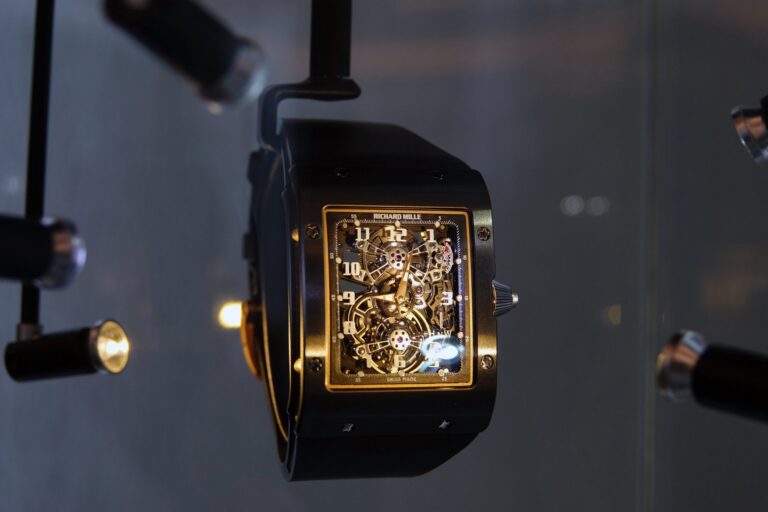
Rolex, too, asserts dominance through cultural ubiquity and technical feats like the Parachrom hairspring, while disruptors such as Richard Mille push boundaries with avant-garde materials. These “new contenders” signal a pluralistic future, where the Trinity coexists with a broader pantheon, enriching the discourse without dethroning the originals.
The Holy Trinity Watches
The Holy Trinity—Audemars Piguet, Patek Philippe, and Vacheron Constantin—stands as the unassailable guardian of horology’s highest ideals, weaving threads of history, ingenuity, and exclusivity into timepieces that transcend utility.
Their collective legacy not only elevates mechanical artistry to philosophical heights but also inspires an industry perpetually striving for transcendence.
For collectors and aficionados, the Trinity offers more than possessions: it bestows a narrative of stewardship, where each watch becomes a chapter in personal and familial lore. On a broader scale, these maisons sustain Switzerland’s horological hegemony, fostering innovation that ripples through apprenticeships, patents, and global markets.
In an age of ephemera, the Holy Trinity reminds us that true luxury endures, ticking eternally as a testament to human ingenuity.