There is a unique magic to an automatic timepiece. It is a complex machine, a miniature engine powered not by a battery or a daily manual winding, but by you. This mechanical marvel seems to run on air, drawing life from your every gesture. But this is not magic. It is a beautiful execution of physics centered on one critical, elegant component: the rotor.
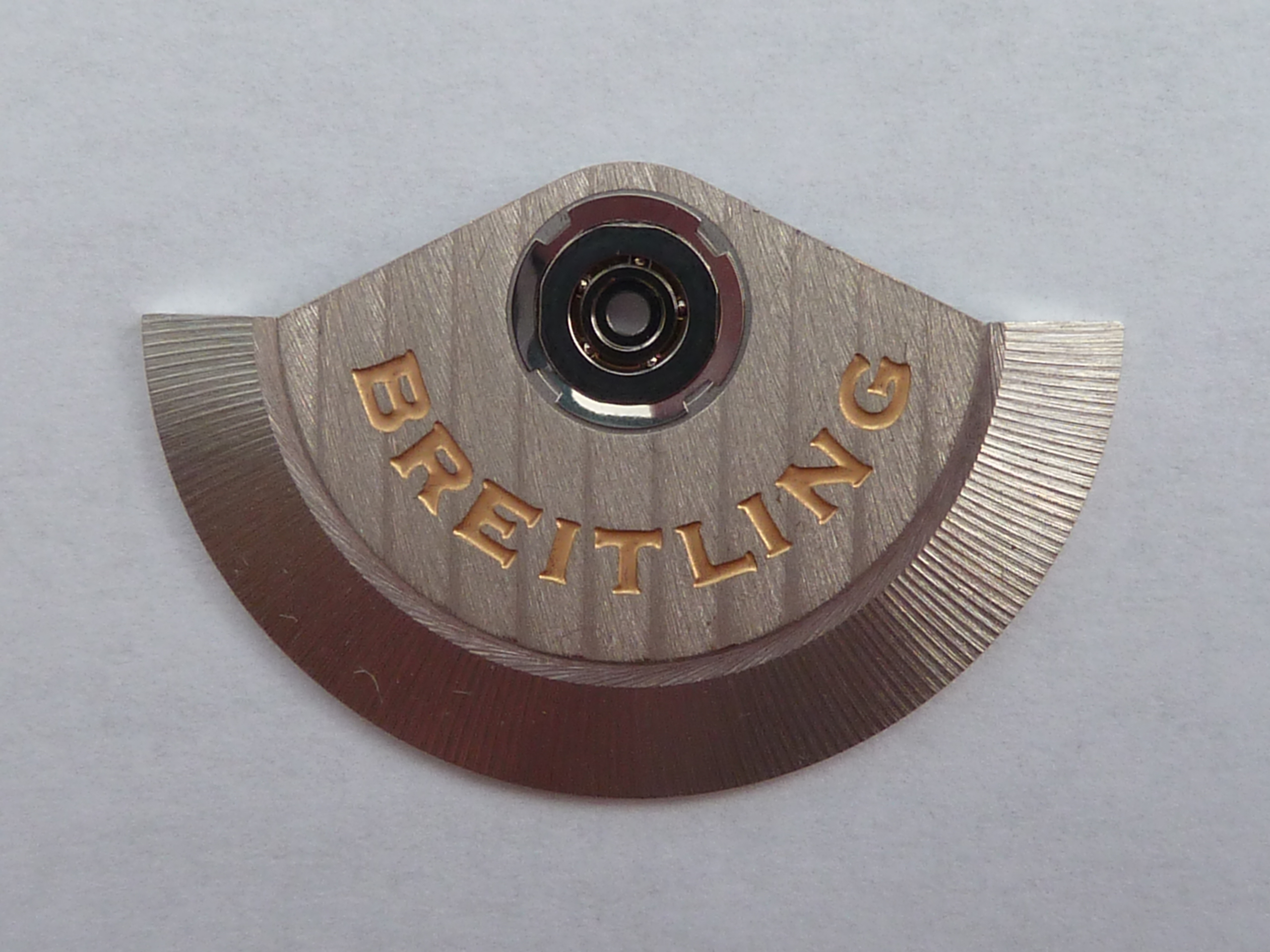
For many enthusiasts, the rotor is the very soul of a self winding watch. Visible through an exhibition caseback, it swings gracefully, a constant reminder of the living mechanism within. It is the bridge between the wearer and the intricate world of gears, jewels, and springs. Understanding the rotor is understanding the heart of automatic horology.
What is an Automatic Watch Rotor?
At its core, the automatic watch rotor, technically known as an “oscillating weight,” is a weighted, semi circular (or sometimes full circle) metal component that is mounted on a central pivot or bearing. It is designed to swing freely in either direction, responding to the forces of gravity and the kinetic energy generated by the motion of the wearer’s wrist.
Its singular purpose is to convert this kinetic energy into potential energy. It achieves this by winding the mainspring, the coiled band of metal that stores and delivers the power to run the entire watch movement.
While a manual watch requires the wearer to turn the crown to tighten this mainspring, an automatic watch subcontracts this labor to the rotor. As long as the watch is worn, the rotor is spinning, constantly “topping off” the power reserve. This ingenious system provides the convenience that defines the modern automatic watch.
The Winding Mechanism How the Rotor Works
The journey from a simple wrist movement to a running watch is a masterpiece of micro engineering. When you move your arm, the rotor pivots around its axis. This spinning motion is where the process begins.
- Kinetic Input: The rotor spins. Because it is weighted (often heavily on its outer edge), it gains momentum and continues to spin even after the initial motion stops.
- Gear Train Engagement: The rotor’s central pivot is connected to a small series of gears. This gear train is known as the automatic winding bridge or module. Its job is to harness the rotor’s powerful but erratic spinning.
- Winding the Mainspring: This gear train ultimately connects to the ratchet wheel, which sits atop the mainspring barrel. As the rotor spins, its gears turn the ratchet wheel, which slowly tightens the mainspring coiled inside the barrel.
- Preventing Overwinding: What happens when the mainspring is fully wound? Automatic movements have a built in safety system. The outermost end of the mainspring is not fixed to the barrel wall but is instead attached to a special “slipping clutch” or “bridle.” When the spring reaches full tension, any additional winding force from the rotor simply causes this bridle to slide safely along the inside of the barrel wall, preventing the mainspring from snapping.
This entire sequence happens thousands of times a day without you ever noticing. It is a silent, efficient engine transforming your life’s motion into the precise measurement of time.
A Brief History of Self Winding Technology
The concept of a self winding mechanism is surprisingly old. The earliest versions were developed in the 1770s by Abraham-Louis Perrelet and later refined by Abraham-Louis Breguet for pocket watches. These early systems used a “bumper” style weight that swung back and forth. However, these were not commercially successful and the idea lay dormant for over a century.
The true birth of the modern automatic watch came in 1923 with John Harwood, a watchmaker from the Isle of Man. He patented a system that used a pivoting weight which “bumped” between two springs, winding the mainspring.
The final, crucial innovation came from Rolex in 1931. Their “Perpetual” movement introduced a central rotor that could rotate a full 360 degrees, rather than just bumping back and forth. This was far more efficient and became the blueprint for virtually every automatic watch that followed. Rolex’s design set the standard for the next century of watchmaking.
Unidirectional vs Bidirectional Winding
Not all rotors wind the watch in the same way. This is one of the key technical differentiators between movements.
Unidirectional Winding
Some movements feature a rotor that only winds the mainspring when it spins in one specific direction (either clockwise or counterclockwise). When it spins in the “idle” direction, it freewheels, disconnected from the winding train. The famous Valjoux 7750 chronograph movement is a well known example of a unidirectional winder. Owners of these watches often notice a distinct “wobble” or gyroscopic feeling on the wrist as the heavy rotor spins freely in its non winding direction.
Bidirectional Winding
This is a more complex but generally more efficient system. Through a clever set of reversing gears or a pawl based system, the rotor winds the mainspring regardless of which direction it spins.
Rolex perfected this with its red reversing wheels, which use pawls to ensure the output is always in the winding direction. Perhaps the most celebrated bidirectional system is the Pellaton winding system, developed by Albert Pellaton for IWC in the 1940s. It uses an eccentric cam and two ruby rollers to transfer power, a system known for its incredible robustness and efficiency.
The debate over which is “better” is endless. Bidirectional is theoretically more efficient as no motion is wasted. However, unidirectional systems can be simpler to service and can be highly efficient in their chosen direction.
The Materials That Matter Rotor Composition
The goal of a rotor is to generate the maximum amount of inertia in the smallest possible space. To do this, it needs to be dense. The material choice is therefore not aesthetic but functional.
While the base of a rotor might be brass, the crucial oscillating weight itself is made from a heavy metal.
- Tungsten: This is a very popular choice in modern, high performance movements. Tungsten is incredibly dense, affordable, and durable. It has an industrial, gray appearance and is often used by brands like Omega in their Co-Axial calibers.
- Gold (22k or 24k): For much of watchmaking history, solid gold was the material of choice. Gold is extremely dense (heavier than lead) and adds a significant level of luxury. A beautifully finished gold rotor seen through a caseback is a hallmark of a high end timepiece.
- Platinum: Reserved for the most exclusive timepieces, platinum is even denser than gold. It provides the absolute maximum winding efficiency and represents the peak of luxury.
You will rarely see a steel rotor weight. Steel simply is not dense enough to generate the winding power needed in the compact space of a watch movement.
Types of Rotors Beyond the Standard
While the central, semi-circular rotor is the standard, watchmakers have developed ingenious alternatives to solve specific problems.
Central Rotor
This is the Rolex “Perpetual” design. The rotor is mounted on a bearing at the very center of the movement. It is effective and robust. Its one disadvantage is that it obscures roughly half of the movement from view, which is why luxury brands spend so much time decorating it.
Micro Rotor
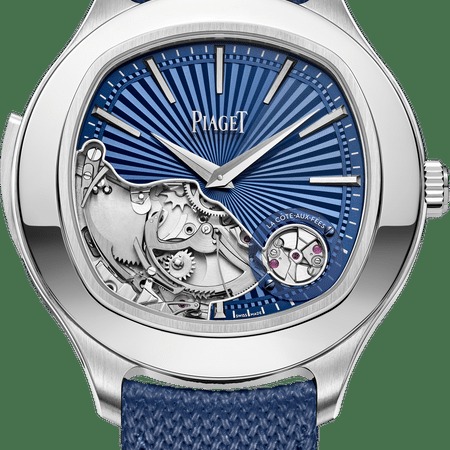
Pioneered by brands like Piaget and Patek Philippe (in its famous caliber 240), the micro rotor is a much smaller, off center weight. It is integrated directly into the movement, sitting flush with the bridges rather than on top of them. The massive advantage is thinness. A micro rotor allows for the creation of incredibly slim automatic watches, a hallmark of technical prowess. The trade off is reduced mass, which requires flawless engineering to ensure winding efficiency.
Peripheral Rotor
This is the most technically demanding and visually stunning solution. The peripheral rotor is a large, thin ring (often of gold or platinum) that orbits around the outside of the movement, guided by tiny bearings. This system, perfected by brands like Carl F. Bucherer and Vacheron Constantin, provides the winding efficiency of a full sized rotor but leaves the entire movement visible. It is the best of both worlds, offering an unobstructed view just like a manual watch.
The Art of the Rotor Decoration and Finishing
In the era of the exhibition caseback, the rotor has transformed from a purely functional part into a canvas for artistry. For high end watchmakers (haute horlogerie), a plain rotor is a missed opportunity.
This is where you see the craft of finishing on full display:
- Côtes de Genève: These “Geneva stripes” are the most common and beautiful decoration, creating a wave like pattern that catches the light.
- Perlage: A pattern of small, overlapping circles.
- Engraving and Guilloché: Many brands will engrave their logo, a crest, or intricate “guilloché” patterns directly onto the rotor’s surface.
- Skeletonization: Some rotors are skeletonized, meaning material is artistically cut away to reveal the mechanism beneath, often forming the shape of the brand’s logo.
A decorated rotor in solid gold or platinum is a statement. It tells the owner that the brand cares about the beauty of the mechanism, not just its function.
Why the Rotor Defines the Automatic Experience
The rotor is more than just a component. It is the primary point of interaction between you and your watch. You provide the power, and the rotor harnesses it. This creates a tangible connection.
It is the part you can feel, like the aforementioned Valjoux wobble. It is the part you can often hear, a faint whirring sound as it spins inside the case. And in a modern watch, it is the part you can see, a constant, kinetic dance that reminds you that your watch is alive.
The rotor is the ingenious, elegant solution that freed us from the crown. It is a symbol of convenience, a testament to 20th century innovation, and a beautifully decorated piece of art. It is, in every sense, the true engine of your timepiece.