It is a feeling unlike any other. You have saved, you have researched, and you are finally ready to pull the trigger on your first significant luxury watch. The thrill of owning a piece of horological art, a symbol of craftsmanship and history, is immense. But there is a shadow that lurks in this high-end world: the counterfeit market. The fear of spending thousands on a watch only to discover it is a worthless fake is a legitimate nightmare for every new collector.
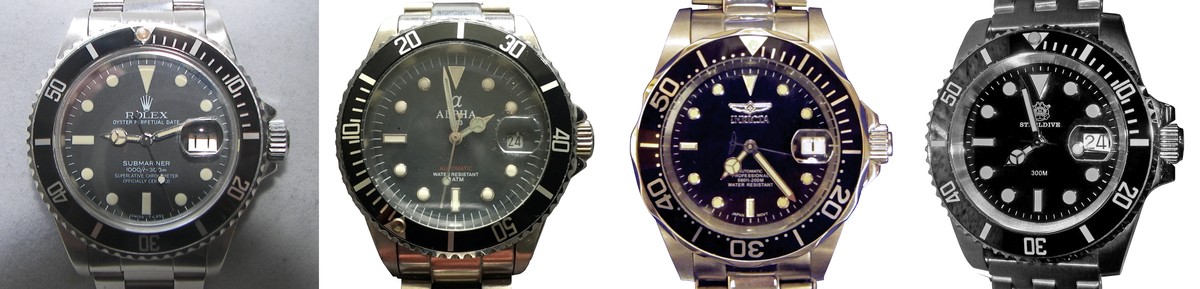
The truth is, fakes are getting better. So-called “superfakes” can look convincing at a glance. But they are never perfect. Luxury watchmaking is an industry built on precision down to the micron. This is an obsessive attention to detail that counterfeiters, with their focus on volume and low cost, simply cannot replicate.
This guide is your first line of defense. We will teach you the seven fundamental ways to examine a watch. You will learn to trust your senses and develop an eye for the tiny details that separate a masterpiece from an imitation.
The Price and Seller Are Your First Red Flag
Before you even touch the watch, your first two clues are the price and the person selling it. This is where most beginners get trapped.
Let us be perfectly clear: there is no such thing as a new, 50-percent-off Rolex from a “friend of a friend” who “got a deal.” Reputable luxury brands like Omega, Patek Philippe, and Audemars Piguet tightly control their pricing and distribution. They do not have clearance sales.
If a price seems too good to be true, it is. A price that is significantly below the established market value (even the pre-owned market value) is the biggest red flag in existence.
Equally important is the seller. Are you buying from an Authorized Dealer (AD)? This is the safest way to buy new, as they receive their watches directly from the brand. Are you buying from a highly-rated, world-renowned pre-owned dealer with a physical store and a long history? This is also a very safe option.
The danger comes from online marketplaces, forum posts, or private sellers with no track record. Always remember the collector’s motto: buy the seller, not the watch. A reputable seller will provide guarantees, authentication papers, and a clear history. A shady seller will offer excuses.
Feel the Weight and Quality of Materials
When you finally hold the watch, your hands will tell you a lot. A genuine luxury watch is a dense, solid piece of engineering. Brands use high-grade materials like 316L or 904L stainless steel, 18k gold, platinum, and titanium. These materials have significant heft.
Pick up the watch. It should feel substantial, even surprisingly heavy for its size. The weight should be balanced, not just in the case itself but also through the bracelet.
A fake watch will often feel light and flimsy. This is because they use cheaper, lower-grade steel, hollow bracelet links, or metal alloys that are merely plated to look like gold. If you tap the bracelet and it rattles or feels “tinny,” that is a very bad sign. A real bracelet feels like a single, solid piece of metal, with smooth articulation and no sharp edges.
Scrutinize the Dial Details with a Magnifying Glass
This is where the mask truly slips. The dial is the face of the watch, and it is where luxury brands showcase their perfection. Counterfeiters simply cannot match this level of quality control. You do not need a professional loupe to start, even a simple magnifying glass or your phone’s camera zoom will reveal a lot.
Look for these four things:
- Text and Printing: On a real watch, all text (the brand name, “Swiss Made,” model name) will be perfectly crisp, sharp, and raised. The letters will be evenly spaced and perfectly formed. On a fake, the text often looks flat, splotchy, or “bubbly.” You might see spelling mistakes or letters that are too close together or have fuzzy edges.
- Indices (Hour Markers): The markers, whether printed or applied, must be perfect. They should all be perfectly aligned, exactly the same shape, and perfectly centered. Fakes often have crooked markers, or markers with poorly applied paint.
- The Lume: “Lume” is the luminescent material that glows in the dark. On a real watch, the lume is applied precisely and evenly within the borders of the hands and markers. On a fake, the lume is often sloppy, “lumpy,” or spills over the edges. A fake’s glow will also be weak and fade very quickly, while a real watch (like a Seiko or Omega) will glow brightly for hours.
- The Hands: The hands should be finished to perfection. Look at the edges. They should be sharp, clean, and free of any burrs or rough spots.
Check the Crystal and the Date Magnification
The “glass” covering the dial is called the crystal. For decades, the industry standard for luxury has been sapphire crystal. Sapphire is incredibly hard and virtually scratch-proof.
You can perform a simple “water drop test.” Place a small drop of water on the crystal. On a genuine sapphire crystal with its anti-reflective coating, the water will hold its shape in a tight, clean bead due to high surface tension. On a cheaper mineral or plastic crystal used in fakes, the water will spread out and smudge.
For watches with a date function, the date window is a key tell. The numbers on the date wheel should be perfectly centered in the window. The font should be crisp.
The most famous example is the Rolex “Cyclops.” This is the magnifying bubble over the date. On a real Rolex, the magnification is exactly 2.5x and “snaps” the date to fill the entire window. On fakes, the magnification is weak (often 1.5x), the font looks wrong, and the date appears small and off-center.
Listen to the Movement and Watch the Seconds Hand
The movement is the “engine” of the watch. There are two main types: quartz (battery-powered) and mechanical (powered by a spring).
The easiest tell is the seconds hand. A quartz watch has a seconds hand that makes one distinct “tick” per second. A mechanical watch has a smooth, sweeping seconds hand.
Many fakes try to pass off a cheap quartz movement as a high-end mechanical one. If you see a watch that should be a mechanical automatic (like a Rolex Submariner or Omega Speedmaster) but the seconds hand is ticking once per second, it is a glaringly obvious fake.
Now, some fakes do use cheap mechanical movements. But even here, you can spot them. A high-quality Swiss movement (like in a Rolex) beats at a high frequency (e.g., 8 beats per second), making its sweep look very smooth. A cheap fake mechanical movement beats at a lower frequency (e.g., 6 beats per second), so its sweep will look choppier or more “stuttery.”
Finally, listen. A high-quality mechanical watch is almost silent. You may have to press it to your ear to hear a faint, fast “whirring.” A cheap fake mechanical movement is often loud, and you can hear a distinct, tinny “tick-tick-tick” from a foot away.
Inspect Engravings Serial Numbers and Logos
Precision is the religion of luxury watchmaking. This applies to every engraving on the watch. Look at the case back, the clasp, and the brand logo on the crown (the winding knob).
On a genuine watch, engravings are deep, sharp, and precise. The lines are clean, and the fonts are correct. Laser-etched serial numbers will be incredibly fine and perfect.
On a fake watch, the engravings are often shallow, “scratchy,” or look like they were poorly stamped. The logos may look “fat” or have the wrong proportions. The lettering on the case back might be poorly spaced or have a “sandy” texture inside the letters.
A serial number is also a powerful tool. On a real watch, this number is unique. On fakes, manufacturers often use the same serial number for thousands of watches. A quick internet search for the watch’s serial number can sometimes reveal it as a known fake.
Test the Bracelet Clasp and Components
Finally, test the moving parts. The bracelet and clasp are high-contact areas that must be perfect. As mentioned, the bracelet links should be solid and heavy.
Pay special attention to the clasp. Open and close it. A genuine clasp will operate with a smooth, satisfying “click.” It will feel secure and engineered. A fake clasp will feel flimsy, gritty, or hard to close. The logo engraved on the clasp will also suffer from the same issues as other engravings: shallowness and poor finishing.
Check the crown. Unscrew it (if it is a dive watch). It should unscrew smoothly, not feel gritty. When you pull it out to set the time, the hands should engage crisply with no “wiggle” or “slack.” A fake crown will often feel wobbly and disconnected.
Your Best Defense is Knowledge
Buying your first luxury watch should be a proud and exciting moment, not a fearful one. While counterfeiters are a known problem, a little knowledge is your ultimate shield.
It all comes down to details. A luxury watch is the sum of a thousand perfect parts. A fake is the sum of a thousand compromises. Train your eye to spot those compromises. Check the price, feel the weight, and scrutinize the dial. If anything at all feels wrong, trust your gut and walk away. And when in doubt, always have the watch professionally authenticated.