To glance at a Richard Mille watch is to see a statement of extreme wealth, tut to truly understand one you must look deeper. Past the celebrity endorsements and the eye-watering price tags that run into the millions of dollars there lies a world of radical engineering. The conversation about these watches often gets stuck on their price.
The real story however is not what they cost but what they are. The secret to their value is not in diamonds or precious metals. It is in a relentless pursuit of performance that has completely rewritten the rules of Haute Horlogerie. This is a deep dive into the movement technology that makes Richard Mille the undisputed “racing machine for the wrist”.
Beyond the Hype A New Philosophy of Watchmaking
Richard Mille did not enter the world of high-end watchmaking to follow traditions. He came to shatter them. While historic brands were competing over centuries of heritage and traditional finishing like Côtes de Genève or perlage Richard Mille looked to the world of Formula 1 racing and aerospace for inspiration.
This philosophy is the most critical concept to grasp. A traditional luxury watch movement is built like a classic limousine. It is heavy elegant beautiful and fragile. It prioritizes aesthetic perfection. A Richard Mille movement is built like an F1 engine. It prioritizes three things above all else:
- Lightness: Every fractional gram is a potential source of inefficiency or inertia.
- Shock Resistance: It must perform flawlessly under conditions that would destroy a normal watch.
- Performance: It must deliver its function (telling time) with precision under extreme duress.
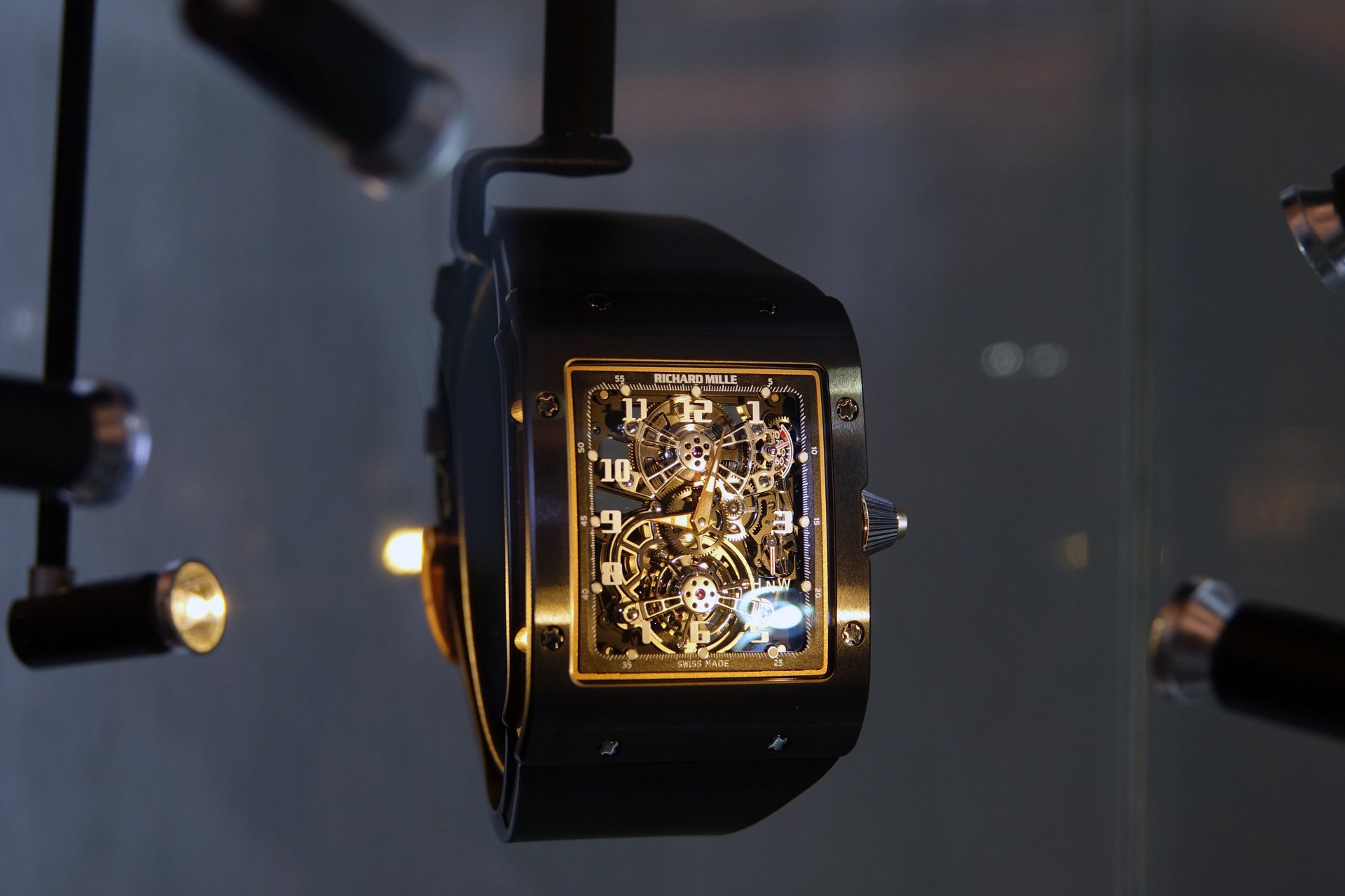
This philosophy dictates every single component. The famous skeletonization of Richard Mille movements is not just for aesthetics. It is a functional design choice to reduce mass and improve rigidity just like the chassis of a race car. The brand’s obsession is not with finishing in the traditional sense but with engineering.
The Shock Factor Engineering for Extreme Conditions
We have all seen Rafael Nadal win a Grand Slam tournament while wearing a multi-million dollar tourbillon. This is not a marketing stunt. It is the brand’s entire R&D program displayed live on a global stage. The G-forces generated by a professional tennis swing would obliterate a standard mechanical watch. The tiny pivots springs and gears would shatter.
So how does Richard Mille create a tourbillon that can withstand a 10,000 G impact? The answer lies in architectural innovation.
Take the RM 27-01 Rafael Nadal. Its entire movement weighs just 3.5 grams. This featherweight caliber is suspended in the center of the case by four braided steel cables each only 0.35mm thick. This cable system acts like a spider’s web. It isolates the delicate movement from any shock or vibration the case experiences. This is not watchmaking as we know it. This is advanced mechanical engineering.
Other models achieve this robustness through different means. Baseplates are not made of traditional brass. They are often crafted from Grade 5 titanium or a honeycomb structure of Carbon TPT. These materials are incredibly rigid and light creating a “unibody” construction where the case and movement baseplate become one single resilient piece.
Material Science Pushing Horological Boundaries
While other brands focus on 18k gold or 950 platinum Richard Mille is focused on materials that sound like they belong in a space station. This is a massive part of the expense.
The brand famously pioneered Carbon TPT and Quartz TPT. These are not simple materials. They are composites made from hundreds of layers of parallel filaments (carbon fiber or quartz fibers) stacked on top of each other. These layers are fused together under extreme pressure and heat.
The result is a material that is unbelievably light and strong. But the real challenge is machining it. These composite materials are brutal on tools. A single watch case can take hours upon hours to mill often destroying hundreds of drill bits and milling heads in the process. The failure rate is high. This extreme difficulty and high cost of manufacturing are factored directly into the final price.
Then there is ARCAP. This alloy is used in many Richard Mille movements for its anti-magnetic properties and corrosion resistance. It is so stable that it does not require the traditional plating that other movement components need. But it is also notoriously difficult to work with.
This use of cutting-edge materials is not for show. It is essential to the brand’s performance-first philosophy. Titanium and Carbon TPT reduce the inertia in the movement. This means it takes less energy to run the watch (improving power reserve) and makes it far more resistant to shocks.
The Partnership Myth Vaucher APRP and In-House Prowess
A common critique leveled at Richard Mille is that they do not produce their movements “in-house”. This is a gross oversimplification and misunderstands the brand’s brilliant strategy.
Richard Mille does not have a single large factory. Instead it operates as the central hub in a network of the most elite suppliers and specialists in Switzerland. Many of their automatic and simpler calibers are developed in partnership with Vaucher Manufacture Fleurier. These are not “off-the-shelf” movements. Richard Mille co-develops them to its own extreme specifications for skeletonization and material use.
The brand’s most complex creations the “experimental” watches are developed with Audemars Piguet Renaud & Papi (APRP). APRP is a legendary high-complication workshop. Again this is not just buying a movement. It is a true collaboration. Richard Mille provides the “impossible” brief (e.g. “make a tourbillon that can survive golf”) and APRP’s engineers work for years to figure out how to build it.
In recent years Richard Mille has also developed its own fully in-house calibers like the CRMA7 in the RM 67-02. This gradual vertical integration shows the brand is securing its own production capabilities. This “best-of-breed” approach allows Richard Mille to access the best talent for each specific problem without being limited by a single factory’s capabilities.
Inside the Caliber Key Richard Mille Innovations
The technology inside the movements is just as radical as the materials. Richard Mille has introduced several patented features that are now signatures of the brand.
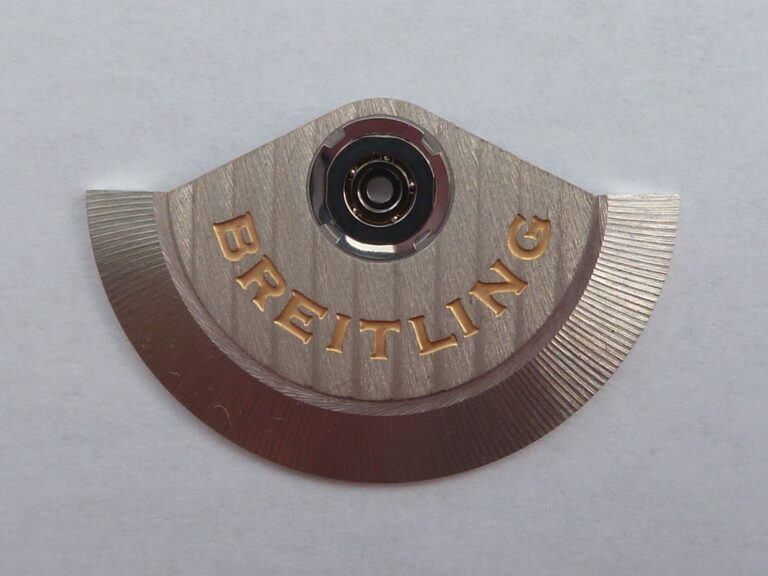
Variable Geometry Rotor: Many automatic RM watches feature a rotor (the part that winds the watch using your arm’s motion) that can be adjusted. A watchmaker can change the geometry of the rotor’s fins to speed up or slow down the winding based on the owner’s lifestyle. A very active person (like an athlete) would have it set to wind slower to prevent over-winding the mainspring. This is like tuning the transmission of your car to your personal driving style.
Function Selector: Look at the crown of many RM watches and you will not see a traditional pull-out system. Instead they have a push-button on the crown that functions like a gearbox. You press the button to select W (Winding) N (Neutral) or H (Hand-setting). This mechanism is incredibly complex but it solves a major watchmaking weakness. Pulling out a crown puts lateral stress on the delicate stem which is a common point of failure. The RM function selector completely eliminates this risk.
G-Force Sensor: Some models like the RM 36-01 Sébastien Loeb feature a mechanical G-force sensor. This is an entirely mechanical complication with over 50 parts that can visually display the G-forces experienced by the driver. It is a wildly complex and arguably “useless” complication. But it is a perfect example of the brand’s F1-inspired DNA.
The Real Cost R&D and Exclusivity
This brings us back to the price. The development cost for a single new case material or a shock-proof tourbillon can run into the tens of millions of dollars.
Richard Mille only produces around 5,000 watches per year total. Compare that to Rolex which produces over a million.
When you spread a 20 million dollar R&D cost over 50 watches (the typical run for a limited edition) you begin to see why the prices are so high. The cost of every failed prototype every broken tool and every hour of a master watchmaker’s time is baked into that final product.
You are not just buying a watch. You are funding a skunkworks program for experimental horology. You are buying a machine built with a “money is no object” approach to research and development.
In the end the secret of the Richard Mille movement is simple. It is a machine built without compromise. It discards 300 years of traditional thinking to pursue a single goal: ultimate performance. That pursuit is what costs millions.