For the true watch enthusiast, the dial is merely the face. The real soul of the timepiece, its beating heart and its artistic resume, is hidden just beneath. In an age of quartz convenience and automatic winding, the manual movement remains the purest expression of mechanical watchmaking. It demands a daily, tactile interaction between owner and machine.
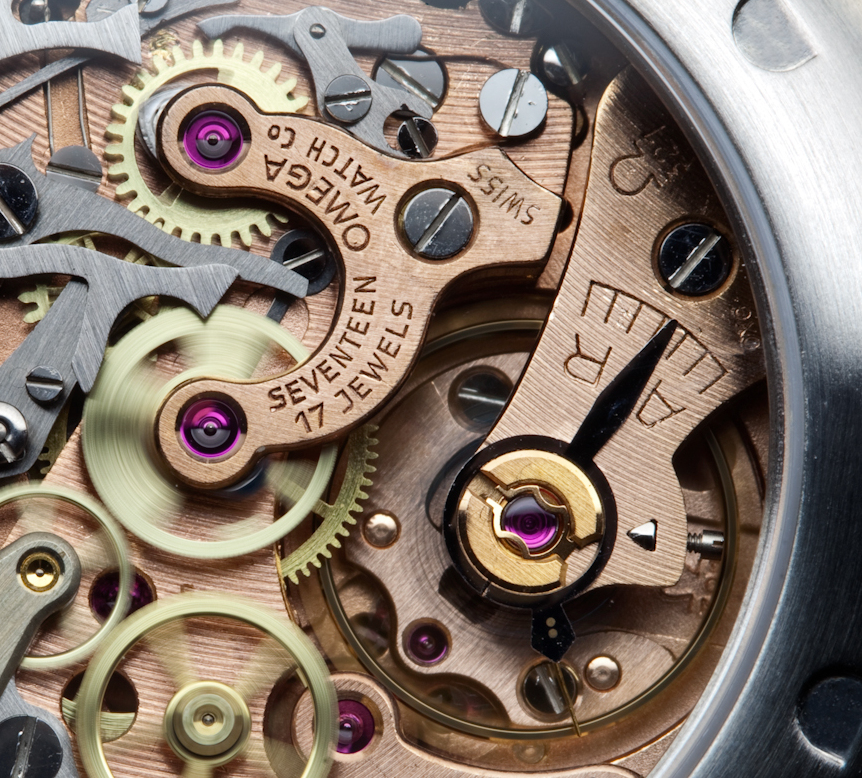
But not all manual movements are created equal. Far from it.
On the surface, two movements might both tell time. Yet one might be a simple, mass-produced engine while the other is a miniature sculpture of mechanical art, demanding hundreds of hours of painstaking human labor. For the collector, the investor, or simply the curious, knowing how to spot the difference is paramount. This is not about brand names. This is about tangible, visible, and functional quality.
This guide will look beyond the sapphire case back and teach you how to analyze a manual movement like a seasoned expert. We will explore the holy trinity of quality: architecture, finishing, and materials.
The Visible Soul Movement Architecture
Before a single screw is polished, the movement’s architecture is decided. This is the layout, the blueprint, the three-dimensional design of the bridges, plates, and components. A high-quality architecture is not just functional it is beautiful.
Look for a sense of depth and deliberation. Lower-grade movements often appear flat and utilitarian. All components are crammed onto a single level, designed purely for efficient mass production. A superior movement, by contrast, invites you in. Bridges are layered, creating a visual depth that is complex and engaging. You will see the gear train winding its way through the mechanism, or the balance wheel oscillating in a clearly defined space.
The shape of the bridges is a key indicator. Are they simple, blocky, and functional? Or are they elegantly curved, symmetrical, and skeletonized to reveal the components beneath? The German tradition, for example, often uses a large “three-quarter plate” which is extremely stable but can hide the mechanism. The Swiss tradition favors multiple “finger” bridges, which are more delicate and showcase the individual gears. Neither is inherently superior, but the execution of the design is what matters. A high-quality movement’s architecture always feels intentional, balanced, and aesthetically pleasing.
Finishing The True Mark of Craftsmanship
If architecture is the skeleton, finishing is the skin, muscle, and artistry. Finishing, or finissage, refers to the decoration and polishing of every single component, even those you will never see.
Historically, this had a functional purpose. Polished surfaces created less friction. Beveled edges helped parts fit together and caught dust. Today, in high-end watchmaking, these techniques have been elevated to an art form. This is the single most important area that separates the good from the truly great.
Machine finishing is common. It is clean, precise, and uniform. Hand finishing is rare, expensive, and filled with tiny, perfect imperfections that signal a master’s touch. A machine can apply Geneva stripes, but a human hand must guide the tool to create internal angles. It is this human element, this dedication to perfection far beyond necessity, that defines a high-quality movement.
A Glossary of Elite Finishing Techniques
To truly judge a movement, you must speak the language of finissage. Here are the key techniques to look for.
- Côtes de Genève: Also known as Geneva stripes or “damaskeening”. These are the beautiful, broad, parallel stripes often seen on bridges. What you look for here is consistency and depth. The stripes should be perfectly aligned across separate bridges, a sign of great care. They should reflect light with a deep, undulating shimmer, not a shallow, flat etch.
- Perlage: This is circular graining, a pattern of tiny, overlapping circles. It is typically applied to the mainplate, the base of themovement, and other flat surfaces hidden under the bridges. It is done with a rapidly spinning peg. Again, look for uniformity in size and a perfect overlap. It is a sign that the watchmaker cared about decorating even the unseen parts.
- Anglage: This is perhaps the most critical sign of quality. Anglage, or chamfering, is the act of cutting a precise 45-degree bevel on the edge of every bridge and plate. In basic movements, this is done quickly by a machine, leaving a sharp, flat edge. In a high-quality movement, this bevel is done by hand with a file, then meticulously polished with a succession of tools, often ending with soft wood. The result is a bevel that is not flat but gently rounded, or “bombé”. It catches the light with a brilliant, white line.
- The Internal Angle: This is the holy grail of anglage. Any machine tool, being round, cannot cut a sharp, inward-facing corner. It will always leave a small radius. A true, sharp internal “V” angle must be carved by hand with a specialized file. It is incredibly time-consuming and difficult. Finding even one is an undeniable signal of elite, manual craftsmanship.
- Black Polishing: Known as poli noir or “specular polish”. This is not a color but a texture. The goal is to polish a steel component (like a screw head or a tourbillon cage) so perfectly flat that it appears either brilliant white or jet black depending on the angle of the light. It is done by hand, rubbing the component on a tin plate with fine diamond paste for hours.
- Screws and Jewels: Look at the small details. Are the screw heads flat and functional, or are they polished to a mirror finish? Are they “heat blued” (a traditional method creating a deep, iridescent blue) or just chemically colored? A high-quality movement will often feature “chatons”, which are gold rings that hold the ruby jewels. This is a very traditional and expensive technique, a clear nod to historic watchmaking.
Materials That Define Durability and Prestige
While most movements are made of rhodium-plated brass and steel, high-end manufacturers use specific materials to improve performance and signal exclusivity.
One of the most famous is “German Silver” or maillechort. This is an alloy of copper, nickel, and zinc used extensively by A. Lange & Söhne. It is harder than brass, heavier, and has a beautiful warm, silvery-gold hue. It is left untreated and develops a gentle patina over time, which is highly prized by collectors.
Look also at the balance wheel. Is it a standard nickel wheel, or is it made from Glucydur, a special, stable alloy? Is the balance spring (hairspring) made of silicon? Silicon is antimagnetic and highly resistant to temperature, leading to better accuracy. While modern, it is a sign of high-tech functional quality.
The Heartbeat Performance and Innovation
A beautiful movement must also perform its duty. Accuracy and reliability are key.
The “beating heart” is the balance wheel and escapement. A “free-sprung” balance wheel is a sign of advanced watchmaking. Most movements use a “regulator” index, a small lever to adjust the timing. A free-sprung system (used by Patek Philippe, Audemars Piguet, and Rolex) has no regulator. The timing is adjusted by small weights on the balance wheel itself. This is more difficult to set but is far more stable and resistant to shocks over time.
Accuracy certifications are a good baseline. A COSC “Chronometer” certification is excellent. However, many of the very best brands, like Patek Philippe (Patek Philippe Seal) or Grand Seiko, hold themselves to even stricter internal standards of accuracy, often testing the watch after it is fully cased.
Finally, consider the power reserve. A standard manual movement may run for 40 to 50 hours. A high-quality, modern manual movement often incorporates advanced mainspring technology to offer 72 hours, 100 hours, or even multiple days of power. This shows a commitment to modern engineering, not just traditional finishing.
In House Versus Ebauche The Great Debate
A common question is whether a movement must be “in-house” to be high quality. The answer is no.
“In-house” means the brand designed and manufactured the movement itself. This signifies massive investment and a unique brand philosophy. However, many respected brands use a base movement, or ebauche, from a high-end supplier (like an old Unitas 6497) and then finish it to their own extraordinary standards.
A base Unitas movement can be found in a $500 watch. That same base movement, completely disassembled, rebuilt with new components, and given elite anglage, perlage, and black polishing by an independent master, can be the heart of a $50,000 work of art. The key is not the origin, but the level of work and finishing applied.
Ultimately, identifying a high-quality manual movement is an act of observation. It is about training your eye to see beyond the superficial and appreciate the hundreds of hours of deliberate, patient, human artistry. It is about finding the sharp internal angle, the mirror-like black polish, and the balanced architecture. When you find it, you are not just looking at a machine for telling time. You are looking at the very soul of watchmaking.