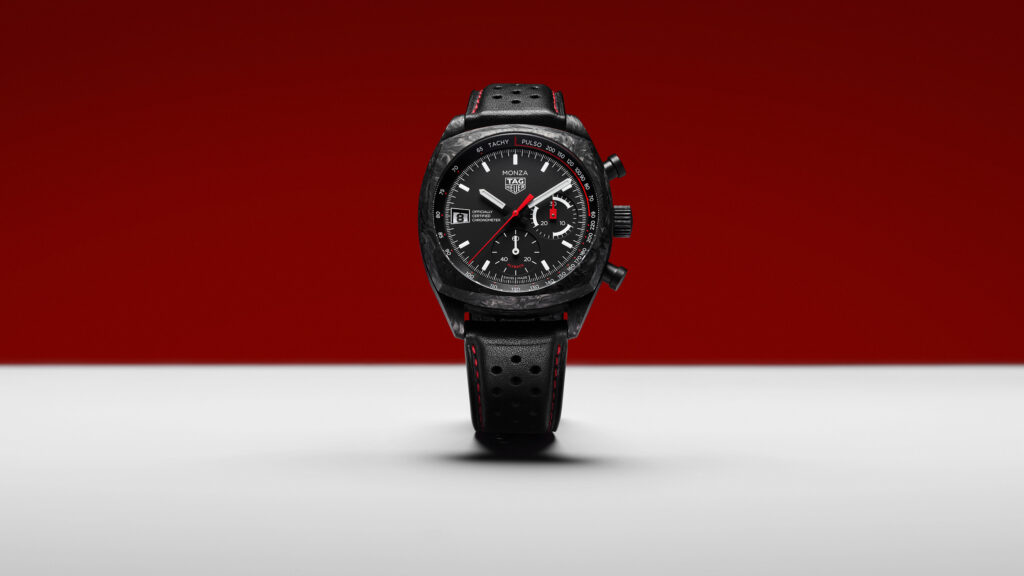
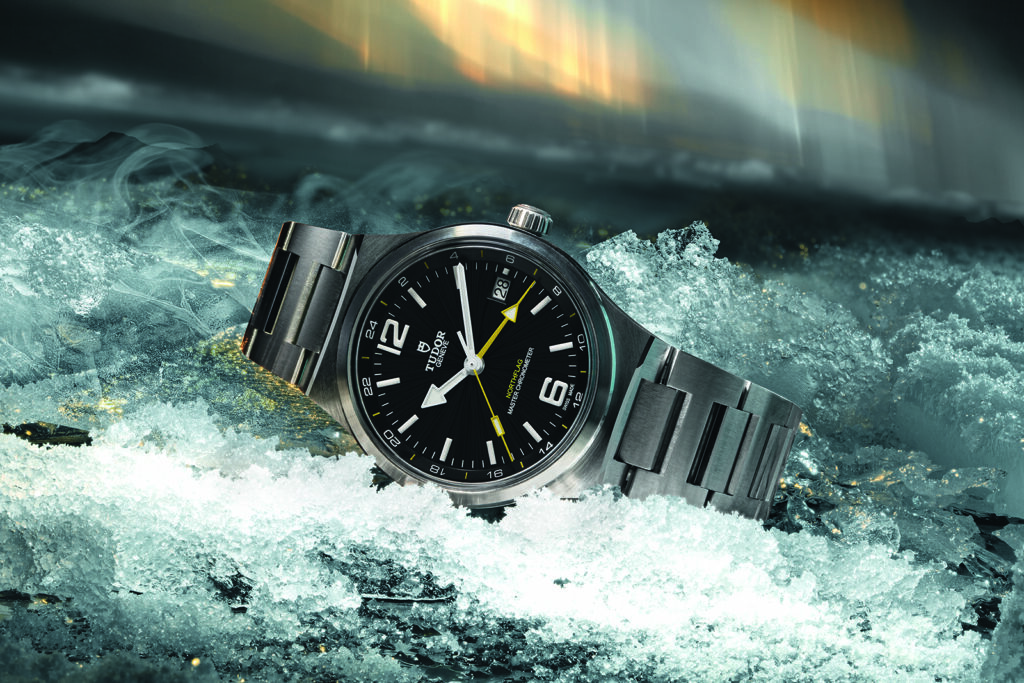
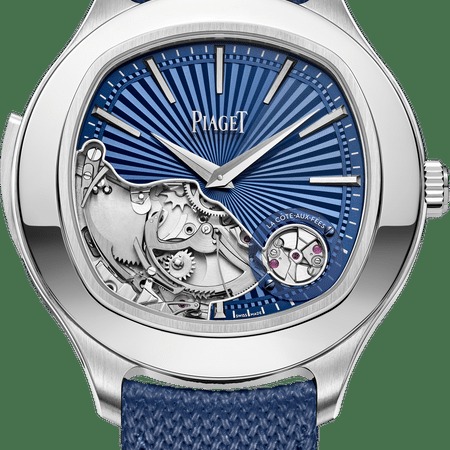
For centuries, the heart of a watch was a miniature, mechanical universe. A symphony of springs, gears, and levers, meticulously crafted and assembled by hand in the quiet, alpine valleys of Switzerland, ticked away on the wrists of the world. The Swiss weren’t just leaders in the art of horology; they were horology. Their dominion was absolute, built on a foundation of centuries of tradition, innovation, and an unwavering commitment to craftsmanship.
But in the late 1960s, a technological earthquake was rumbling, and the epicenter was, ironically, partly of their own making. What followed was a period of unprecedented disruption, a decade-long storm that would bring the mighty Swiss watch industry to its knees and forever change the way we tell time. This was the Quartz Crisis.
Before the Storm: The Unquestioned Reign of Swiss Mechanics
To understand the sheer magnitude of the Quartz Crisis, one must first appreciate the world it shattered. In the mid-20th century, “Swiss Made” was not just a label; it was the ultimate guarantee of quality, precision, and prestige. The Swiss controlled over 50% of the global watch market by volume. Their industry was a complex ecosystem of thousands of specialized companies, from large, storied maisons like Patek Philippe and Omega to countless small, family-owned workshops that produced single components like hairsprings or jewels.
The mechanical watch was a marvel of micro-engineering, an object of both utility and soul. Its value was intrinsically tied to the human skill required to create it. The rhythmic sweep of a mechanical seconds hand was the sign of a living machine, a testament to the artisan’s touch. This was a world built on incremental improvements, not radical revolutions.
The Swiss innovated, to be sure—developing the automatic winding mechanism, the waterproof case, and the chronograph, but these were evolutions of the same fundamental principles established centuries prior. This deep-seated belief in the supremacy of the mechanical movement was both their greatest strength and their most fatal flaw. They were masters of their universe, but they couldn’t see a new one being born.
The Swiss Paradox: Inventing Their Own Demise
Here lies the great irony of the Quartz Crisis: the first-ever quartz wristwatch was not born in a sterile Japanese laboratory, but in the heart of the Swiss industry itself. In 1962, concerned about emerging electronic timekeeping technologies from the United States (Bulova’s Accutron), the Swiss watch federation established the Centre Electronique Horloger (CEH) in Neuchâtel. This consortium of over 20 top Swiss brands was tasked with a single mission: to research and develop an electronic, quartz-based watch movement to secure Switzerland’s future.
And they succeeded spectacularly. The science behind quartz is both simple and brilliant. When an electrical current is passed through a tiny, tuning-fork-shaped quartz crystal, it vibrates at an incredibly high and stable frequency—precisely 32,768 times per second.
An integrated circuit counts these vibrations and translates them into a single electrical pulse every second, which drives a motor to move the watch hands. The result was a timekeeping mechanism with accuracy that was orders of magnitude better than the finest, most expensive mechanical chronometers. A mechanical watch might drift by several seconds a day; a quartz watch would drift by only a few seconds a month.
By 1967, the CEH had produced its first working prototype, the legendary “Beta 21.” It was a technological triumph. However, the Swiss industry, a confederation of proud and competing brands, was culturally unprepared for their own invention. They viewed this new technology with suspicion and a touch of disdain. It lacked the “soul” and craftsmanship of a mechanical movement.
It was a product of electronics, not artistry. They debated endlessly about how to industrialize it, with each brand jealously guarding its own interests. They saw it as a curiosity, a niche product, rather than the industry-redefining force it was. They had invented the future, but they chose to remain in the past.
The Seiko Shock: A Christmas Present That Changed Everything
While the Swiss hesitated, others were moving with purpose. Across the globe, the Japanese company Seiko had also been relentlessly pursuing quartz technology. They saw it not as a threat to tradition, but as a revolutionary opportunity to deliver unparalleled accuracy to the masses.
On December 25th, 1969, Seiko fired the shot heard ’round the watch world. They released the Seiko Astron 35SQ, the world’s first commercially available quartz wristwatch. It was housed in a solid gold case and was incredibly expensive, costing as much as a medium-sized car. But its price wasn’t the point. The Astron was a statement of intent. It proved that quartz technology was not a lab experiment; it was a viable, marketable product.
What followed was a masterclass in manufacturing and scaling. Japanese companies like Seiko and Citizen leveraged their expertise in electronics and mass production to rapidly drive down the cost of quartz movements. Within a few short years, reliable, hyper-accurate quartz watches became available for a fraction of the cost of the cheapest Swiss mechanical watch. The paradigm had shifted overnight. For the average consumer, the choice was simple: a less accurate, more fragile, and far more expensive mechanical watch, or an affordable, durable, and near-perfectly accurate quartz watch that you only had to set once or twice a year.
The Great Upheaval: Switzerland on the Brink
For the Swiss watch industry, the effect was cataclysmic. It wasn’t a downturn; it was a total collapse. The fallout ripped through the idyllic valleys of the Jura Mountains, the cradle of Swiss watchmaking. Demand for mechanical watches evaporated. Between 1970 and 1988, the number of watchmaking companies in Switzerland plummeted from over 1,600 to just 600. More than 60,000 watchmakers—over half the industry’s workforce lost their jobs. Storied brands that had survived for centuries vanished into bankruptcy. The Swiss share of the world market disintegrated.
The crisis was existential. It challenged not only their economy but their very identity. The Swiss had defined themselves by their mastery of the mechanical watch. Now, that mastery seemed obsolete, replaced by a soulless battery and a vibrating crystal. The world no longer seemed to value their painstaking craftsmanship. The industry was in a state of shock, rudderless and facing extinction.
The Counter-Revolution: How Swatch and a New Vision Saved the Day
As the industry bled out, a savior emerged from an unlikely place. Nicolas G. Hayek, a consultant hired to oversee the liquidation of the two largest and most ailing Swiss watch conglomerates, ASUAG and SSIH, saw something others didn’t. He saw a path to survival. His analysis was brutal but brilliant: the Swiss could not compete with the Japanese on their terms. Trying to make cheaper quartz movements was a losing battle. Instead, they had to change the game entirely.
His strategy was twofold. First, he advocated for the merger of ASUAG and SSIH to form a new entity (which would eventually become The Swatch Group). This consolidation would streamline production, create economies of scale, and stop the internal bleeding.
Second, and most famously, he championed a radical new concept: the Swatch. It was a watch designed to fight quartz with quartz, but with a uniquely Swiss flair. Made from just 51 components (compared to nearly 100 in a typical quartz watch) and assembled by robots, it was incredibly cheap to produce.
But it wasn’t just cheap; it was a fashion statement. Made of colorful plastic, it was fun, expressive, and collectible. It was marketed not as a serious timepiece but as an accessory. The Swatch was an instant global phenomenon. It reclaimed the entry-level market, generated massive cash flow for the struggling Swiss industry, and, most importantly, put the “Swiss Made” label back on the wrists of millions.
The Rebirth of the Mechanical Soul: From Tool to Treasure
The Swatch saved the volume business, but Hayek’s other masterstroke was to redefine what a mechanical watch was. He understood that if a mechanical watch could no longer compete on performance, it had to compete on emotion. It could no longer be a simple tool for telling time; it had to become an object of art, a symbol of status, and a carrier of heritage.
The Quartz Crisis paradoxically saved the mechanical watch by forcing it upmarket. Brands that survived, like Omega, Longines (both part of the new Swatch Group), Patek Philippe, and Rolex, leaned heavily into their history and craftsmanship. They stopped talking about accuracy and started talking about artistry, tradition, and timelessness. The transparent case back, once a rarity, became common, allowing owners to marvel at the intricate mechanical ballet within. The mechanical watch was reborn not as a necessity, but as a luxury—a conscious choice to appreciate an “obsolete” but beautiful technology in a modern world.
The Enduring Legacy of the Quartz Crisis
Today, the watch industry exists in the world the Quartz Crisis created. It is a bifurcated market. On one side, quartz technology dominates the world of affordable, practical timekeeping. On the other, the mechanical watch thrives in the realm of luxury, commanding prices and prestige higher than ever before.
The crisis serves as a powerful business parable about the dangers of complacency and the failure to adapt to disruptive innovation. The Swiss invented the technology that nearly destroyed them because they were blinded by tradition. Yet, their story is also one of incredible resilience. By embracing a bold new strategy and fundamentally repositioning their core product, they not only survived but engineered one of the greatest industrial comebacks of the 20th century.
The heart of the Swiss watch industry still beats today, not in spite of the Quartz Crisis, but because of it. It was a near-fatal shock that forced a necessary evolution, ensuring that the ticking mechanical universe would continue to fascinate and captivate for generations to come.