Geneva, 1962. A Swiss parachute team jumps into the World Cup venue wearing a wristwatch with a circular scale that no pilot had ever needed — an altimeter. Favre Leuba’s Bivouac, the first mechanical wristwatch with an aneroid barometer, had just landed, and mountaineers from Walter Bonatti to Paul-Émile Victor were about to strap it on. That moment, more than any exhibition medal, is where this house’s modern character was set: practical instruments for people who measure risk in metres.
Favre Leuba is the oldest watch brand still active under its original name, tracing its paperwork back to 13 March 1737, when the Le Locle authorities recorded Abraham Favre as an independent watchmaker. Three centuries later, under the Titan Company, it still builds the two great oddities of Swiss horology: a mechanical wristwatch that reads altitude, and one that reads depth. This article follows the thread from Abraham’s workshop to the current Chief line.
Abraham Favre’s Workshop in Le Locle (1737–1896)
The birth of Favre Leuba traces its lineage to the rugged beauty of the Jura Mountains in Switzerland, where the art of watchmaking flourished amid isolation and ingenuity. It all started with Abraham Favre, a visionary craftsman whose journey into horology began in earnest during the early 18th century. Born in 1702, Abraham apprenticed under the esteemed Daniel Gagnebin in Le Locle starting at just 16 years old in 1718. This period honed his skills in the meticulous assembly of intricate mechanisms, laying the groundwork for what would become one of Switzerland’s most enduring legacies.
By March 13, 1737, an official document from the Le Locle authorities recognized Abraham as an independent watchmaker. This milestone marked the formal inception of what would later evolve into Favre Leuba. At the time, the watchmaking trade in Le Locle was a cottage industry, dominated by family workshops where precision was as much a matter of survival as pride.
Abraham’s early creations were primarily pocket watches, elegant affairs crafted for the discerning elite of Europe. These pieces featured hand-engraved cases and reliable movements that reflected the era’s blend of functionality and finesse.
Abraham’s ascent continued swiftly. In 1749, he earned the prestigious title of Maître horloger du Locle, a designation that affirmed his mastery among peers. His workshop soon became a hub of collaboration.
Notably, in 1764, Abraham partnered with Jacques-Frédéric Houriet, a pioneer in Swiss chronometry, and even crossed paths with the legendary Abraham Louis Breguet. Together, they experimented with innovative escapements and balance wheels, pushing the boundaries of accuracy in an age when timepieces were as much scientific instruments as status symbols.
The Favre family legacy deepened through generations. Abraham’s descendants, including his grandchildren, expanded the operation in the early 19th century. By 1820, Henry-Auguste Favre embarked on audacious global expeditions, peddling the workshop’s finely wrought pocket watches across Germany, Russia, Cuba, New York, Brazil, and Chile. These travels not only secured lucrative markets but also exposed the brand to diverse influences, enriching its designs with subtle exotic flourishes.
The pivotal fusion of the Favre and Leuba names came later in the 19th century, solidifying the brand’s identity. Fritz Favre-Leuba, a key figure in this era, assumed leadership and steered the company toward international acclaim. Under his guidance, Favre Leuba pocket watches garnered accolades at world expositions, beginning with a gold medal at the Great Exhibition in London in 1851.
Subsequent triumphs followed in New York (1853), Paris (1855), Bern (1857), and Porto (1865). These victories elevated the brand from a regional artisan to a global contender, its reputation for reliability and refinement spreading like wildfire among nobility and merchants alike.
A bold entrepreneurial stroke in 1865 saw Fritz Favre himself journey to India, making Favre Leuba the first Swiss watch brand to penetrate this vibrant market. Establishing partnerships in Bombay, he tapped into the subcontinent’s growing appetite for Western luxuries. This move foreshadowed the brand’s cosmopolitan ethos, one that would define its trajectory for centuries.
By 1896, the headquarters shifted from the quaint confines of Le Locle to the bustling sophistication of Geneva. This relocation symbolized maturity, positioning Favre Leuba at the epicenter of Swiss watchmaking innovation. Here, amid Geneva’s guildhalls and workshops, the brand refined its processes, integrating steam-powered machinery while preserving the handcrafted soul of its origins. The foundations laid by Abraham Favre had blossomed into a dynasty, poised for the mechanical marvels of the 20th century.
Calibre FL101 and the Sea Series (1948–1960)
Favre Leuba’s history unfolds like a well-sprung chronograph, each tick revealing chapters of triumph, trial, and transformation. The 20th century dawned with Henri Favre-Leuba at the helm in 1908. Born in 1865 and serving as president until his death in 1961, Henri infused the brand with unyielding vigor. Under his stewardship, Favre Leuba expanded aggressively post-World War II, opening offices in key cities like Bombay, Hamburg, London, Rangoon, Karachi, Singapore, and New York by 1945. This global footprint turned the brand into a household name among adventurers and executives.
Exhibitions became a stage for Favre Leuba’s prowess. From 1946, the brand showcased annually at the Basel Watch Show, and by 1953, it graced the Salon Montres et Bijoux in Geneva. These platforms not only boosted sales but also fostered collaborations. In 1948, Favre Leuba acquired the storied Bovet name and facilities, producing high-precision chronographs under the dual banner until 1950. This alliance honed the brand’s expertise in complications, setting the stage for in-house innovations.
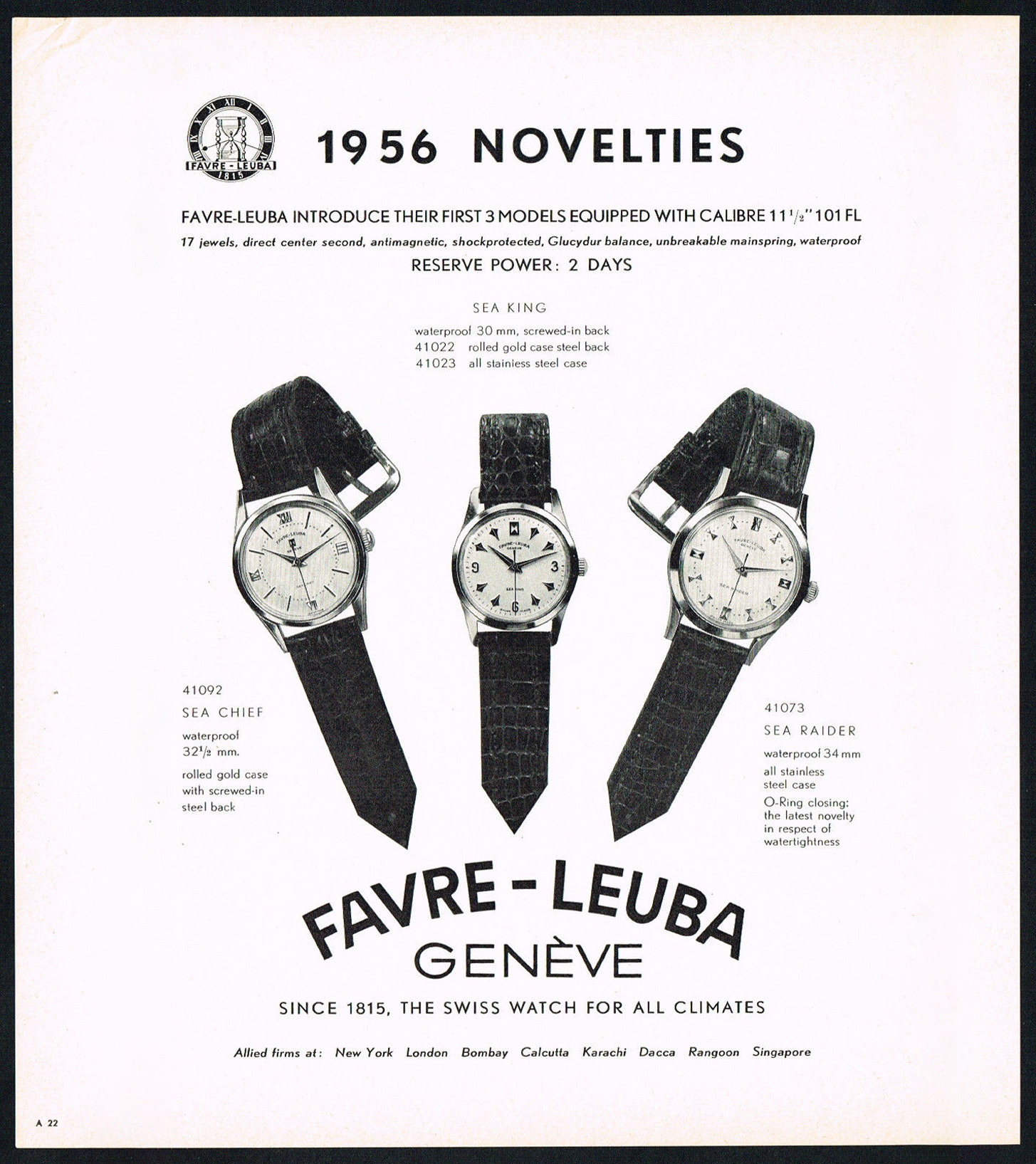
The mid-1950s heralded a golden age of mechanical mastery. In 1955, Favre Leuba unveiled its inaugural in-house caliber, the FL101, powering the Sea Chief, Sea King, and Sea Raider models. These automatic movements represented a leap forward, offering self-winding reliability in robust cases designed for the active man. The Sea series quickly became synonymous with durability, appealing to pilots, sailors, and explorers who demanded timepieces as tough as their pursuits.
Diving into uncharted depths defined the 1960s. In 1960, the Water Deep emerged as Favre Leuba’s first dedicated dive watch, water-resistant and equipped for underwater endeavors. This was no mere accessory. It embodied the brand’s ethos of conquering frontiers. Four years later, the Deep Blue pushed boundaries further, achieving 200 meters of water resistance.
The Bivouac: an Altimeter on the Wrist (1962)
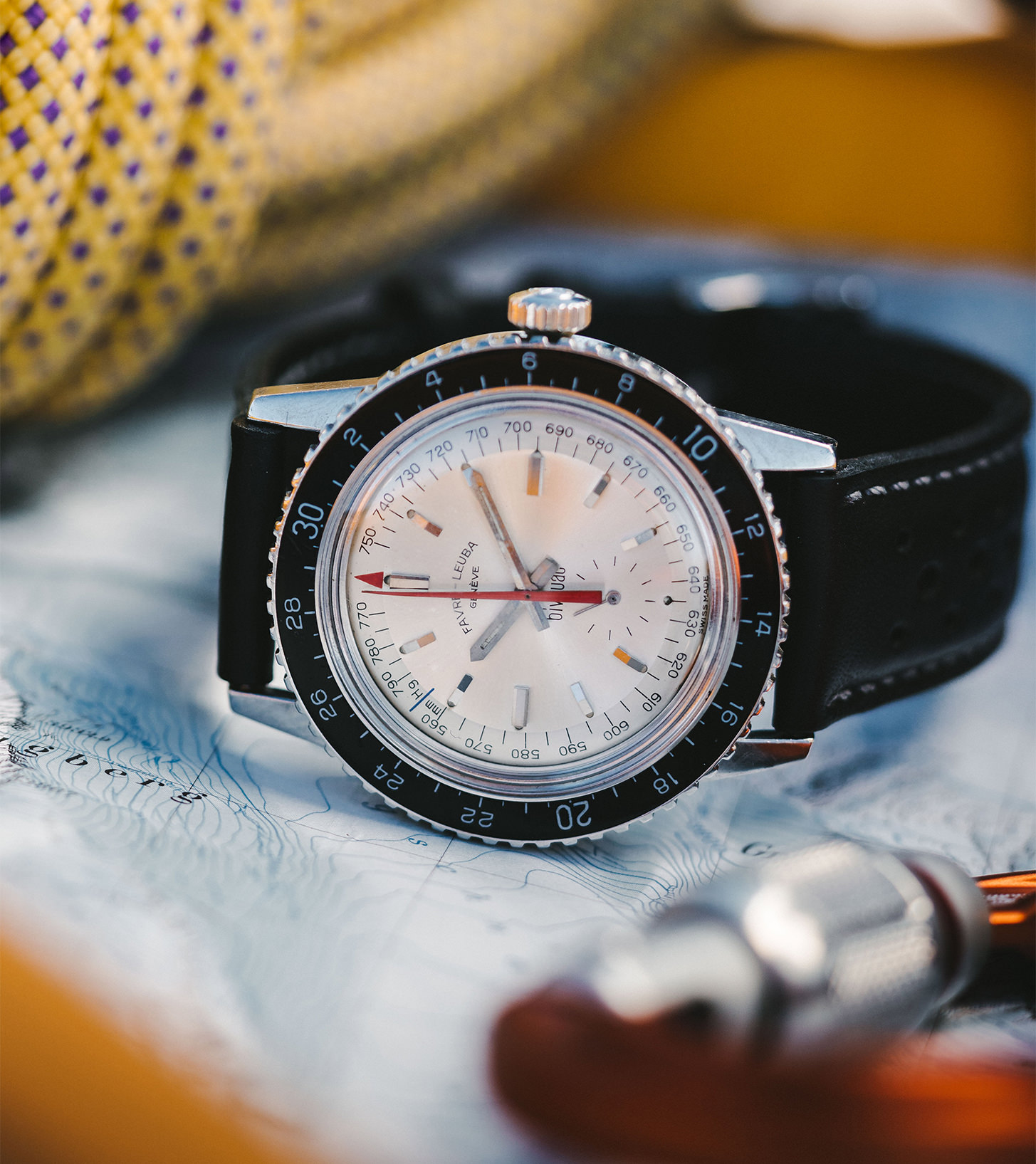
Then came 1962, a banner year. The Bivouac debuted as the world’s first mechanical wristwatch integrating an aneroid barometer for altimetry and air pressure readings. Its FL251 caliber, patented that same year, featured dual barrels for an ultra-thin profile with centered seconds. The Bivouac accompanied elite expeditions: the Swiss parachuting team at the 1962 World Cup, mountaineer Walter Bonatti on his Matterhorn ascents, solo climber Michel Darbelley on the Eiger, and polar explorer Paul-Émile Victor on Arctic treks.
The Bivouac’s dial was its signature: a rotating inner scale paired with a stationary outer ring, driven by the aneroid capsule, showing air pressure in millibars and altitude in metres. A glance told a climber whether a storm front was building long before the sky showed it. Few mechanical instruments have ever put that much tactical information on a wrist.
Bathy: Depth and Dive Time, Mechanically (1968)
Innovation peaked in 1968 with the Bathy, revolutionizing dive watches by displaying both immersion time and depth mechanically. This cushion-cased marvel, with versions like the Bathy 15 (up to 15 meters) and Bathy 300 (deeper dives), captured the imagination of the diving community. The decade closed with the 1970 Sea Raider, boasting an automatic FL1164 with day-date complications, alongside the Memo Raider alarm watch and the Sea Sky GMT chronograph for globetrotters.
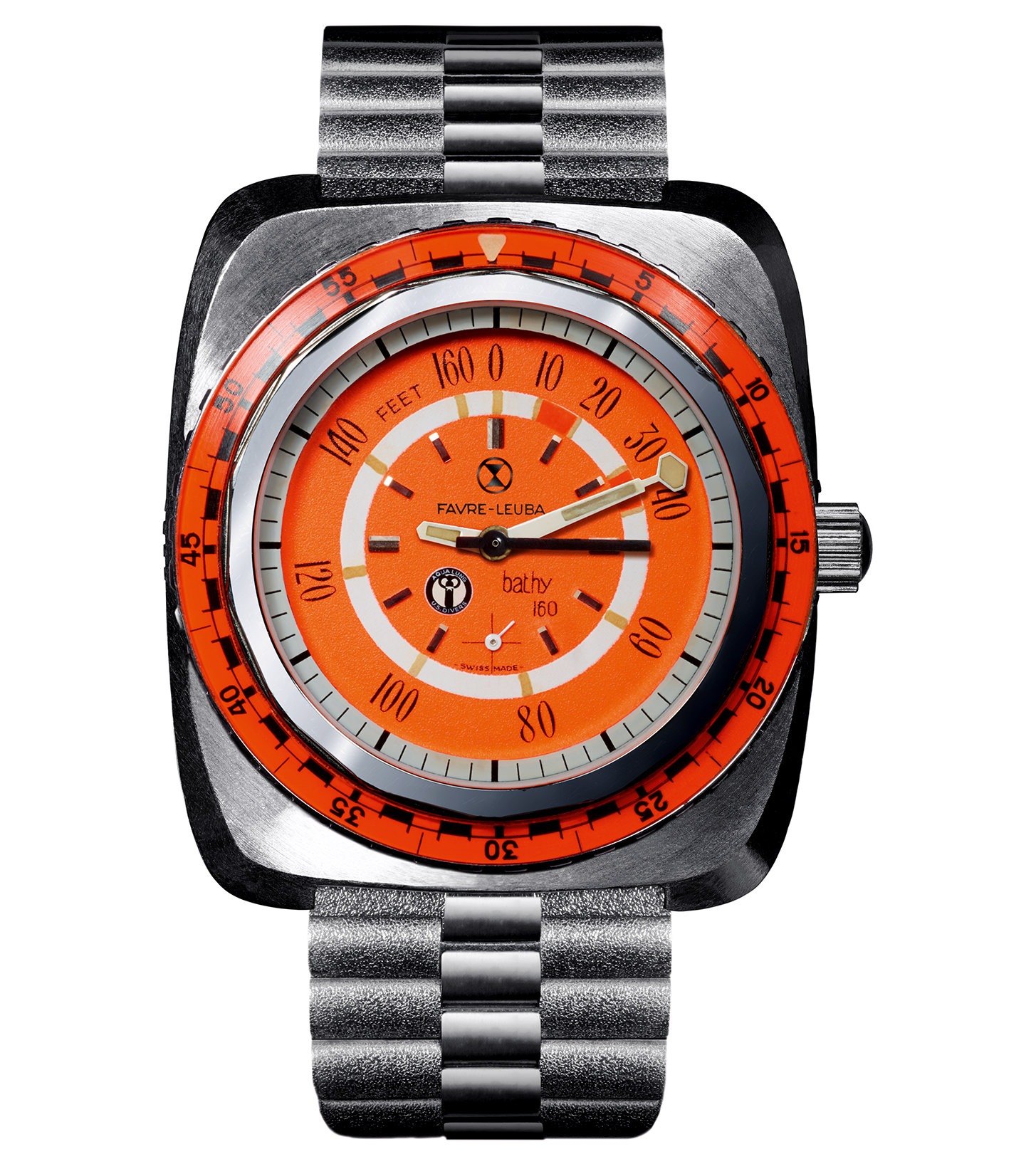
Prosperity waned with the quartz crisis of the 1980s. By 1985, economic pressures forced multiple ownership changes, dimming Favre Leuba’s light. Yet, resilience defined the brand. In 2016, under the Titan Company umbrella, it relaunched with the Raider Harpoon, a dive watch reimagining time-reading for modern divers. The 2017 Baselworld celebrated the 280th anniversary with the Bivouac 9000, a mechanical altimeter echoing its 1962 forebear. Ambassadors like Arctic explorer Pen Hadow, mountaineer Satyarup Siddhanta, and freediver Sayuri Kinoshita embodied the spirit.
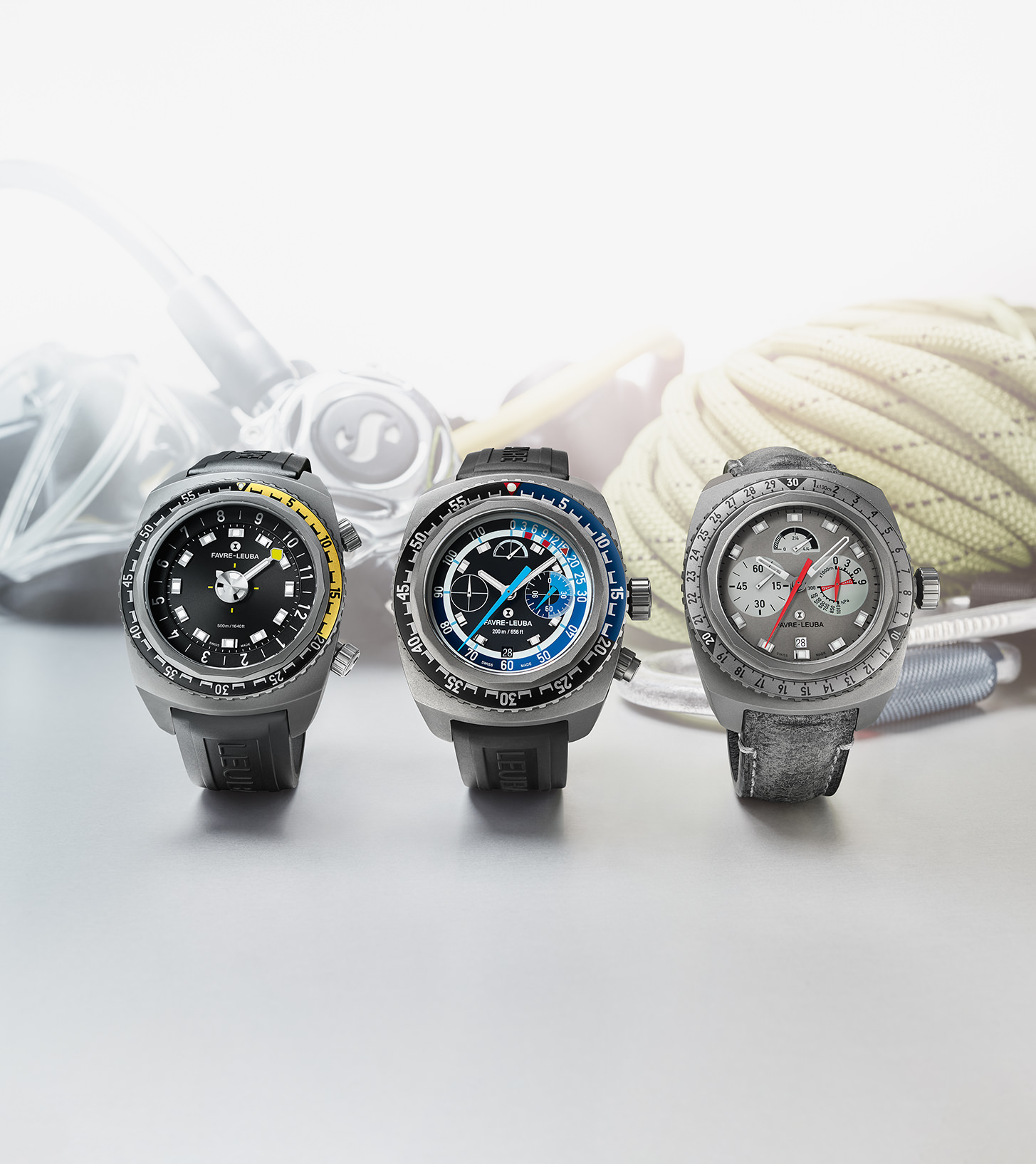
Milestones mounted in 2018: the Raider Bivouac 9000 summited Everest at 8,848 meters, the only mechanical altimeter to do so, and earned a Watchstars award. The Raider Bathy 120 MemoDepth marked the Bathy’s 50th anniversary, measuring depths to 120 meters. By 2024, Geneva Watch Days unveiled the Chief collection (Date and Chronograph), Deep Raider Revival and Renaissance honoring 60 years of diving heritage, and a Sea Sky tribute to 1970s designs. In 2025, the Chief Tourbillon Sablier Dial debuted as the brand’s first tourbillon, crafted with mastermind Jean-François Mojon, alongside the fully skeletonized Chief Skeleton.
Where the Chief Collection Sits Today
Delving into Favre Leuba’s inaugural offerings reveals the humble yet exquisite roots of a horological powerhouse. While specific model names from 1737 remain elusive in archival records, Abraham Favre’s first watches were undoubtedly pocket watches of exceptional caliber. These early pieces, born in the Le Locle workshop, showcased the hallmarks of 18th-century Swiss artistry: silver or gold cases adorned with guilloché engravings, porcelain dials painted with delicate numerals, and movements assembled from hand-forged components.
Historical vignettes paint a vivid picture. Abraham’s debut creations likely drew from his apprenticeship influences, incorporating reliable verge escapements and fusee chains for consistent power delivery. Marketed to European aristocracy, these pocket watches measured time with a precision that rivaled contemporaries like the nascent Blancpain, founded just two years earlier in 1735. A surviving vintage brochure from the era highlights intricate designs, such as repoussé cases depicting pastoral scenes or astronomical motifs, underscoring the blend of utility and ornamentation.
One early standout, though not explicitly the “first,” was a chronometer-grade pocket watch developed in collaboration with Breguet around 1764. This piece featured an advanced compensation balance to mitigate temperature variances, a rarity that earned quiet acclaim among navigators. By the 1820s, Henry-Auguste Favre’s travels popularized these watches in distant ports, where they became prized heirlooms. Awards at the 1851 London Exhibition validated their excellence, with jurors praising the “fineness of execution and durability.”
Transitioning to wristwatches, the brand’s modern debut arrived with the 1955 Sea Chief, powered by the FL101. Yet, the true genesis lies in those anonymous pocket watches of 1737: compact marvels that ticked away the seconds of history itself, forging Favre Leuba’s unyielding commitment to innovation from day one.
From Pocket Watches to the Modern Raider Line
Favre Leuba’s oeuvre spans a spectrum of styles and functions, evolving from ornate pocket watches to avant-garde divers and altimeters. This diversity mirrors the brand’s adaptability, catering to dress occasions, extreme sports, and everything in between.
In the pocket watch era (1737-early 1900s), collections emphasized elegance. Models featured repeater mechanisms and moon phases, often in hunter cases that doubled as conversation starters. The 19th-century awards winners boasted enameled dials and poire hands, blending Victorian restraint with Rococo flair.
The wristwatch revolution of the mid-20th century diversified offerings exponentially. The 1950s Sea series introduced sporty automatics: the Sea Chief for everyday robustness, Sea King for regal complications, and Sea Raider for adventure-ready bezels. By 1960, dive watches proliferated. The Water Deep set the template with screw-down crowns and luminous markers, followed by the Deep Blue’s enhanced lume and helium escape valves.
The 1960s altimeter and depth innovations birthed specialized lines. The Bivouac collection, with its barometric dials, appealed to mountaineers, while the Bathy line integrated pataphysical gauges for divers. The 1970 Sea Sky GMT added world-time functionality, its rotating bezel aiding pilots in transcontinental flights.
Post-revival, collections modernized heritage. The 2016 Raider Harpoon emphasized legibility with inverted displays. The 2017 Bivouac 9000 revived altimetry in titanium cases, water-resistant to 100 meters. Contemporary lines include the Chief series: the Date for minimalist dress, Chronograph for racing pulses, and the 2025 Tourbillon Sablier for skeletal poetry. The Deep Raider Revival pays homage to 1960s divers with 600-meter resistance and helium valves, while Renaissance variants add mesh bracelets for versatility.
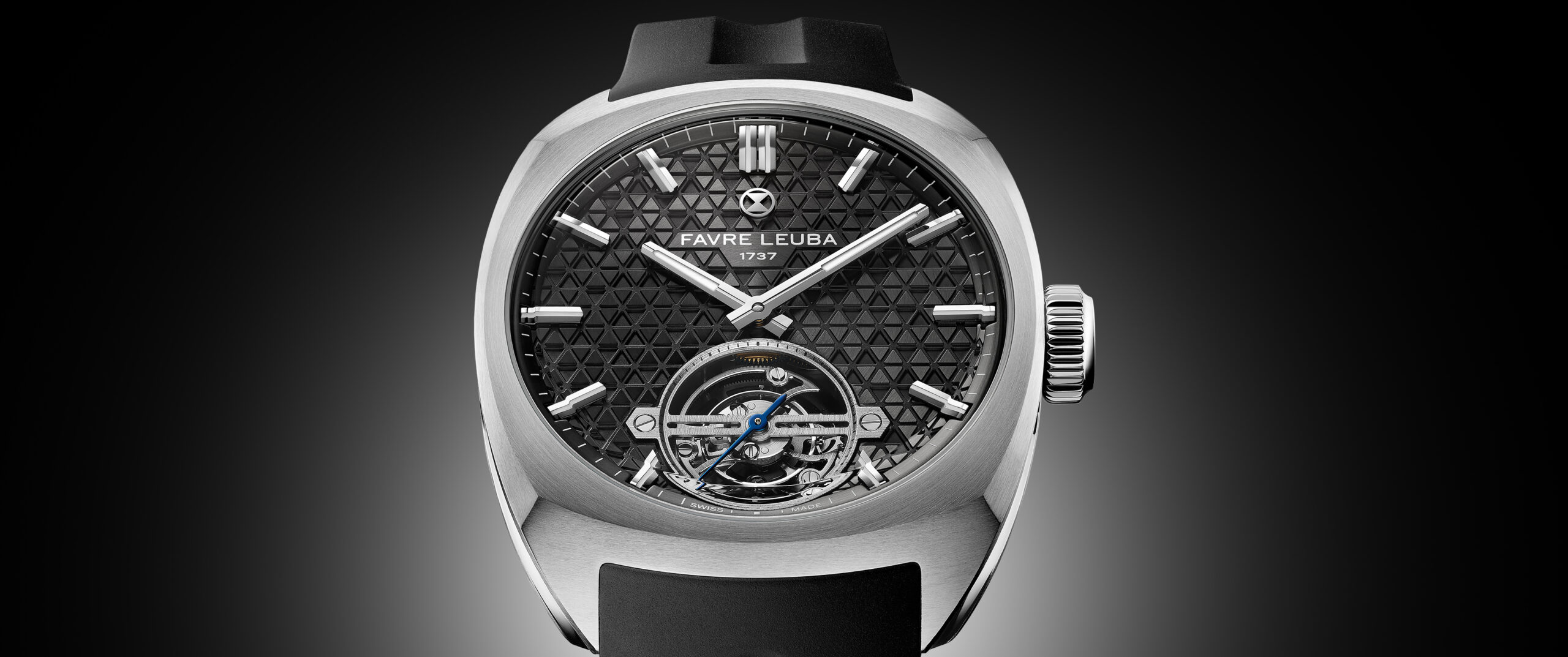
The Sea Sky reboot channels 1970s vibe with integrated bracelets and meca-quartz hybrids. Across eras, Favre Leuba’s watches unify in their DNA: in-house movements like the FL251’s descendants, sapphire crystals, and Swiss-made ethos. From 18th-century pockets to Everest-conquering Raiders, this evolution crafts a collection as boundless as time itself.
On the wrist, the current Chief Tourbillon is a different beast from the Bivouac: skeletonised, modern, and proud of the 289 years behind the logo on its dial. Yet the logic is unchanged. Abraham Favre answered a question no one else had asked in 1737; his successors did the same in 1962, in 1968, and again in 2016. The brand’s continuity is that it keeps finding instruments no one else thought to build.