Few brands evoke the same sense of refined sophistication as Piaget. Nestled in the heart of Switzerland’s Jura Mountains, Piaget has crafted a legacy that blends meticulous craftsmanship with innovative design. Since its inception over a century ago, the maison has transformed from a modest family workshop into a global icon of haute horlogerie.
This article delves into the captivating story of Piaget, tracing its roots, pivotal moments, inaugural creations, and the diverse array of watches that have defined its enduring appeal. For enthusiasts and newcomers alike, understanding Piaget’s journey reveals why it remains a beacon of elegance in the competitive landscape of Swiss watchmaking.
The Origins of Piaget A Humble Beginning in the Swiss Jura
The tale of Piaget begins in the quiet village of La Côte-aux-Fées, a remote hamlet in the Neuchâtel region of the Swiss Jura Mountains. It was here, in 1874, that a young visionary named Georges-Édouard Piaget laid the foundation for what would become one of the world’s most prestigious watch brands.
At just 19 years old, Georges-Édouard set up a small atelier right on his family’s farm. The location was no accident. The Jura Mountains, with their crisp alpine air and isolation from urban distractions, had long been a cradle for precision watchmaking. Families in this rugged terrain honed skills passed down through generations, turning wood and metal into instruments of exact timekeeping.
Georges-Édouard’s early focus was not on complete watches but on the intricate movements that powered them. He specialized in producing high-precision clock mechanisms and pocket watch calibers, supplying them to larger Swiss houses. These components demanded an almost obsessive attention to detail, a trait that would define Piaget for generations.
Working by hand in a space barely larger than a barn loft, he crafted ebauches, or base movements, that rivaled the finest in the industry. His work ethic was legendary. Neighbors recall how he labored late into the night, illuminated only by the flicker of oil lamps, perfecting gears that measured seconds with unerring accuracy.
This humble start was steeped in familial tradition. The Piaget family had roots in the region dating back centuries, with ancestors who were clockmakers and farmers intertwined in the daily rhythm of rural life. Georges-Édouard’s workshop was more than a business; it was an extension of the homestead, where the scent of pine mingled with the metallic tang of polished brass.
By the late 19th century, his reputation spread quietly among fellow artisans. Orders trickled in from nearby valleys, and soon, his movements found their way into pocket watches destined for discerning European gentlemen.
As the 20th century dawned, the atelier evolved under the stewardship of Georges-Édouard’s son, Timothée Piaget. Taking the reins in 1911, Timothée recognized the shifting tides of technology and taste. Wristwatches, once a novelty for aviators and soldiers, were gaining popularity among the broader populace.
He pivoted the family business toward these sleeker designs, commissioning cases and dials to encase his father’s renowned movements. This transition marked Piaget’s first foray into finished timepieces, though the brand name itself remained in the shadows, serving as an unseen powerhouse for marques like Rolex and Patek Philippe.
The true metamorphosis came during the interwar years. By the 1920s, Piaget had become a go-to supplier for elite brands such as Audemars Piguet, Vacheron Constantin, and Cartier. These partnerships honed the maison’s expertise, pushing boundaries in miniaturization and reliability. Yet, it was the post-World War II era that ignited Piaget’s ascent to independence.
In 1943, amid the uncertainties of global conflict, the Piaget trademark was officially registered. This legal milestone, spearheaded by Georges-Édouard’s grandsons Gérald and Valentin Piaget alongside sales director Camille Pilet, signaled a bold departure from anonymity. No longer content to be the silent architect behind others’ successes, the family resolved to etch their name into the annals of horology.
The war’s end brought renewed vigor. In 1945, a new factory rose in La Côte-aux-Fées, its stone walls a testament to resilience. Equipped with modern machinery yet faithful to handcrafting traditions, this facility expanded production capacity tenfold. By the 1950s, Piaget was not just making movements; it was dreaming of complete horological masterpieces.
The Jura’s isolation, once a limitation, now fostered a creative sanctuary where innovation could flourish unchecked by market pressures. This origin story underscores a core Piaget philosophy: excellence emerges from passion, not haste. From a farmstead workbench to a burgeoning manufacture, the brand’s beginnings remind us that true luxury often sprouts from unassuming soil.
Key Milestones in Piagets Watchmaking Journey
Piaget’s path from obscurity to eminence is punctuated by a series of transformative milestones, each one a leap forward in technique and vision. These moments not only elevated the brand’s technical prowess but also cemented its status as a pioneer in ultra-thin watchmaking, a niche where millimeters matter as much as minutes.
The 1950s heralded Piaget’s golden age of innovation. In 1957, the maison unveiled the Calibre 9P, a hand-wound mechanical movement slimmer than a pencil lead at just 2 millimeters thick. This breakthrough was no mere engineering feat; it redefined what was possible in wristwatch anatomy.
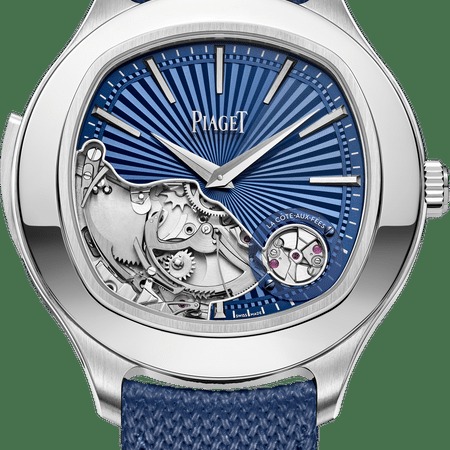
Born from years of secretive experimentation in the Jura workshops, the 9P allowed for cases that hugged the wrist like a second skin, blending comfort with couture-level aesthetics. That same year, Piaget launched its first branded men’s watch, the Emperador, a cushion-shaped marvel that embodied post-war optimism. Its success propelled the brand onto the global stage, attracting tastemakers from Paris salons to New York boardrooms.
The 1960s amplified this momentum. In 1960, the Calibre 12P automatic movement followed suit, measuring a mere 2.3 millimeters in thickness and incorporating a micro-rotor for seamless self-winding. This innovation addressed a perennial challenge: how to automate without bulk. Piaget’s engineers, drawing on metallurgical advances, crafted a rotor from gold to dampen noise and vibrations, ensuring a whisper-quiet operation.
The decade also saw Piaget’s foray into jewelry, opening a Geneva atelier in 1959 dedicated to gem-set timepieces. This fusion of watchmaking and joaillerie birthed hybrid creations like pendant watches and cufflinks, blurring lines between adornment and function.
By the 1970s, Piaget navigated the quartz crisis with characteristic aplomb. While many Swiss houses faltered under electronic onslaughts, Piaget embraced the shift selectively. In 1976, the Calibre 7P quartz movement debuted, the thinnest of its kind at 2.3 millimeters, powering elegant dress watches that retained mechanical soul.
Yet, the maison never abandoned its roots. The 1979 launch of the Polo collection, with its integrated bracelet and sporty-chic vibe, captured the era’s free-spirited glamour. Worn by celebrities from Elizabeth Taylor to Andy Warhol, the Polo became a cultural touchstone, proving Piaget’s versatility beyond formalwear.
The 1980s and 1990s brought consolidation and expansion. Yves Piaget, great-grandson of the founder, assumed presidency in 1980, infusing the brand with fresh energy. Under his guidance, Piaget opened its first boutique in Geneva that year, transforming abstract craftsmanship into tangible luxury. The 1988 acquisition by the Richemont Group provided resources for global outreach without diluting family ethos.
Key collections like Possession in 1993, with its rotating bezel for playful personalization, and Limelight in 1991, inspired by Hollywood glamour, broadened appeal to women. The 1990s also revived the Altiplano line, named after the vast Bolivian plateau symbolizing boundless horizons, emphasizing skeletal dials and skeletalized movements for visual poetry.
Entering the new millennium, Piaget redoubled its haute horlogerie commitment. The 2001 opening of a state-of-the-art facility in Plan-les-Ouates near Geneva centralized jewelry production, while movements stayed rooted in La Côte-aux-Fées. In 2002, the Calibre 600P tourbillon, at 3.5 millimeters thick, claimed the title of world’s slimmest flying tourbillon.
This was followed by the 2014 Altiplano 900P, integrating case and movement into a 3.65-millimeter hand-wound wonder. Today, Piaget continues innovating with movements like the 430P and 450P, both under 3 millimeters, powering pieces that honor heritage while embracing modernity.
These milestones illustrate Piaget’s adaptive genius. From wartime trademark to quartz-era reinvention, each chapter reflects a maison unafraid to evolve, always anchored in the pursuit of elegance. As the brand celebrates over 150 years, its journey whispers a timeless truth: progress in horology is as much about grace as it is about gears.
The Debut of Piagets First Watches
The Debut of Piagets First WatchesPiaget’s transition from movement maker to full-fledged watch brand was gradual yet deliberate, culminating in debuts that set benchmarks for subtlety and style. While the maison supplied calibers for decades, its own labeled timepieces emerged in the mid-20th century, marking a rite of passage.
The inaugural branded watch arrived in 1957 with the Emperador. This men’s model, powered by the groundbreaking Calibre 9P, featured a rectangular case with softened edges, evoking the architecture of mid-century modernism. At around 8 millimeters thick including the crystal, it was revolutionary for its era, when most watches bulged uncomfortably under starched cuffs.
The dial, often in silvered opaline with baton markers, exuded understated luxury. Priced accessibly for the aspiring elite, the Emperador quickly became a staple in European gentleman’s wardrobes. Its success stemmed from Piaget’s dual mastery: the ultra-thin movement allowed for a profile that prioritized wearability, while the design nodded to Art Deco influences lingering from the 1920s.
Women were not overlooked. In the same year, Piaget introduced delicate ladies’ models, often with diamond-set bezels or enamel dials, encased in gold or platinum. These pieces, slim as whispers at under 7 millimeters, catered to a post-war femininity that valued discretion over ostentation. Early advertisements portrayed them against lace gloves and pearl necklaces, positioning Piaget as the choice for refined occasions.
By 1960, the Calibre 12P enabled even sleeker automatics, debuting in round-cased watches with integrated lugs. One standout was the Ref. 911, a 34-millimeter gentleman’s watch with a textured dial mimicking guilloché patterns. Its self-winding mechanism, hidden beneath a solid back, ensured reliability without visual clutter. These first watches shared a common thread: they were not shouts of extravagance but murmurs of sophistication. Piaget avoided the bombast of complications, focusing instead on purity of form.
These debuts laid the groundwork for Piaget’s identity. They proved that a brand born in barns could rival Genevan giants, blending Jura precision with universal appeal. Collectors today seek vintage Emperadors for their historical patina, a reminder that Piaget’s first steps were as measured as the seconds they track.
Exploring Piagets Iconic Watch Collections Through the Ages
Piaget’s oeuvre spans a spectrum of collections, each reflecting an era’s zeitgeist while advancing technical frontiers. From sporty icons to skeletal stunners, these lines showcase the maison’s chameleon-like adaptability.
The Polo collection, launched in 1979, revolutionized casual luxury. Inspired by equestrian elegance, its tonneau-shaped case and riveted bracelet evoked saddle leather and stirrups. The original Ref. 79760 featured a quartz movement for affordability, but mechanical evolutions like the 2000s Polo S added chronographs and date windows.
Today, the Polo Skeleton, with its open-worked dial revealing the Calibre 1200S, merges heritage with contemporary edge, appealing to millennials who crave heritage with a twist.
Dress watches find their pinnacle in the Altiplano, introduced in the 1990s. Named for the high-altitude plains of South America, it embodies expansive minimalism. The Altiplano’s hallmark is its featherlight profile, often under 7 millimeters thick.
The 2016 Altiplano Tourbillon, at 6.36 millimeters, integrates a flying tourbillon into the thinnest possible frame, a feat of micro-engineering. Variants include gem-set editions with mother-of-pearl dials or meteorite accents, transforming the line into wearable art.
For feminine flair, the Possession collection debuted in 1993 with its signature rotating bezel, allowing wearers to twist gemstones like a personal talisman. This playful mechanism, powered by the slim 430P movement, comes in sizes from 29 to 38 millimeters, often in rose gold with diamonds. It’s a nod to empowerment, letting owners customize their sparkle on the fly.
The Limelight series, born in 1991, channels Hollywood’s golden age. Riveting bezels mimic spotlights, while gala-inspired straps in velvet or leather add drama. The Limelight Gala, with its coin-edge case and ultra-thin 430P caliber, measures just 8.65 millimeters, perfect for red-carpet moments. Collaborations, like the 2020s pieces with artist Jeff Koons, infuse pop art into tradition.
Vintage enthusiasts cherish the Black Tie collection from the 1990s, a unisex ensemble of evening-ready formals with black dials and silk-like finishes. Its successor, the Emperador Cushion, revives the 1957 original with modern complications like perpetual calendars.
Across these collections, Piaget’s diversity shines. Sporty Polos for weekends, ethereal Altiplanos for boardrooms, whimsical Possessions for soirées, each line traces the brand’s evolution from farm-forged precision to multifaceted mastery. With over 100 models in active production, Piaget ensures its history pulses forward, one elegant tick at a time.
In reflecting on Piaget’s odyssey, we see a brand that has masterfully balanced tradition and trailblazing. From Georges-Édouard’s lantern-lit labors to today’s gem-encrusted innovations, Piaget endures as a symphony of subtlety.
For those drawn to watches that whisper rather than roar, its legacy offers endless inspiration. As the Jura winds carry echoes of hammers on steel, Piaget reminds us that time, when crafted with care, becomes eternal.