
The Cartier Privé line turns ten this year, and rather than stage a single anniversary piece the jeweller-watchmaker did something more in keeping with its archive obsessed personality. It dug into the back catalogue, pulled out three of the most adored shapes in the collection, and dressed them all in the same quietly opulent platinum and burgundy livery. The result is the Cartier Privé Les Opus, a trio unveiled at Watches and Wonders 2026 that pairs the Tank Normale and the Tortue Chronographe Monopoussoir with an all new Crash Squelette powered by a freshly developed in house calibre.
I spent time with all three on the wrist in Geneva, and the story is less about the splashy new movement and more about how Cartier continues to defend its position as the watchmaker of shapes in a market that increasingly equates luxury with hand finished bridges and haute horlogerie fireworks. The Privé line is a quiet rebellion against that trend. It argues that elegance, restraint, and the right proportions on the right wrist still beat a movement that looks like an Olympic skating rink under a sapphire window.
Three Greatest Hits in Platinum and Burgundy
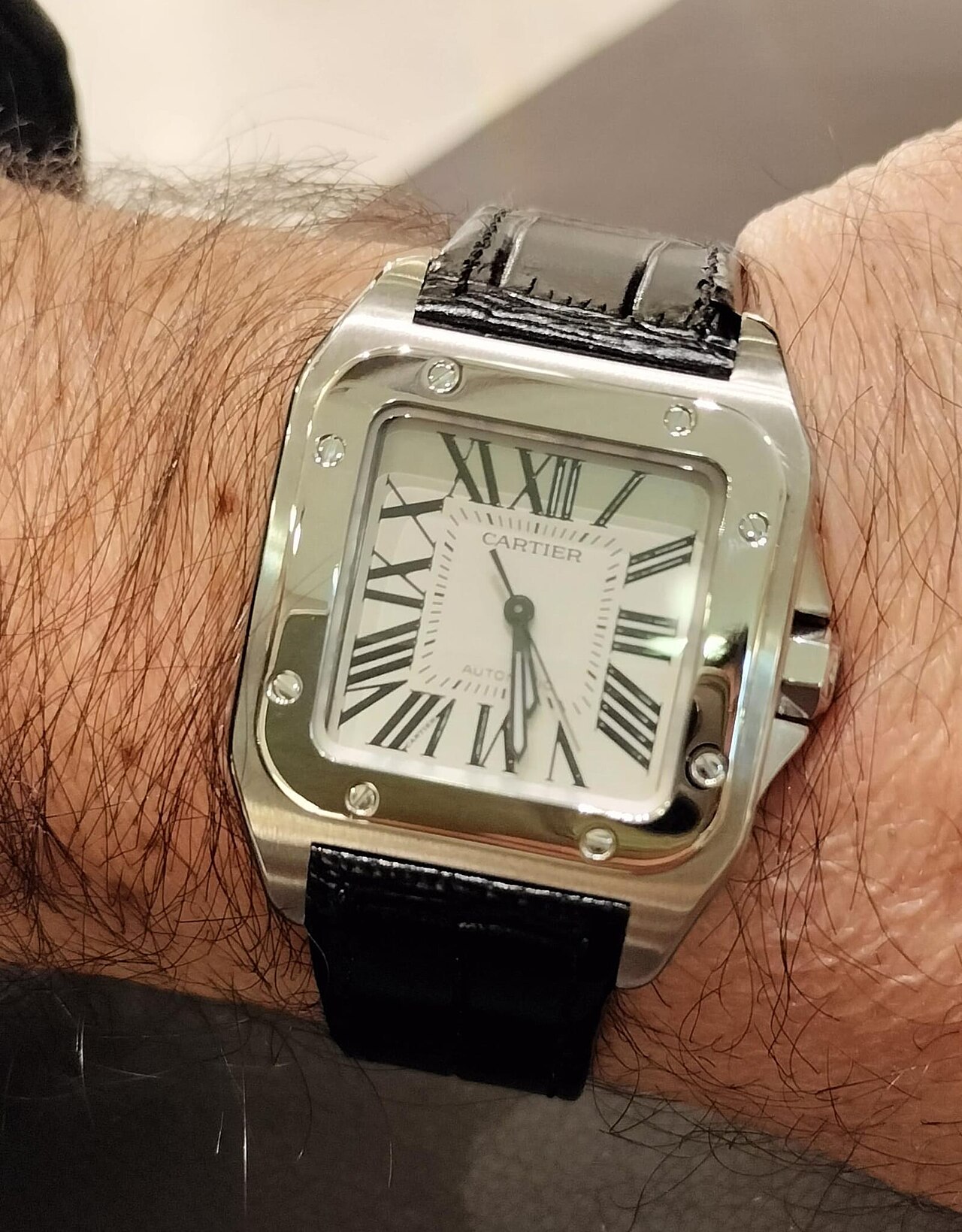
Les Opus means the works in a classical sense, and the name sets the tone. Cartier did not invent any of these cases for the occasion. The Tank Normale traces its lineage to 1917, the original Tortue Monopoussoir chronograph was a 1928 design, and the Crash was born in 1967 at Cartier London. The 2026 treatment takes those three silhouettes and gives them the same identity through colour, a silvered or opaline dial with burgundy red printing and blued steel hands where appropriate, and a platinum case that is just hefty enough to remind you what you paid for.
Two of the three are familiar. The Tank Normale and the Tortue Monopoussoir carry over their existing case sizes and movements, with the new colour scheme doing most of the storytelling. The third piece, the Crash Squelette, is the genuine headliner. It introduces the calibre 1967 MC, a hand wound open worked movement with a hand hammered finish on its bridges, named for the year Cartier London first shaped the asymmetric Crash case. Production is limited to 150 pieces worldwide.
Crash Squelette, The One That Matters
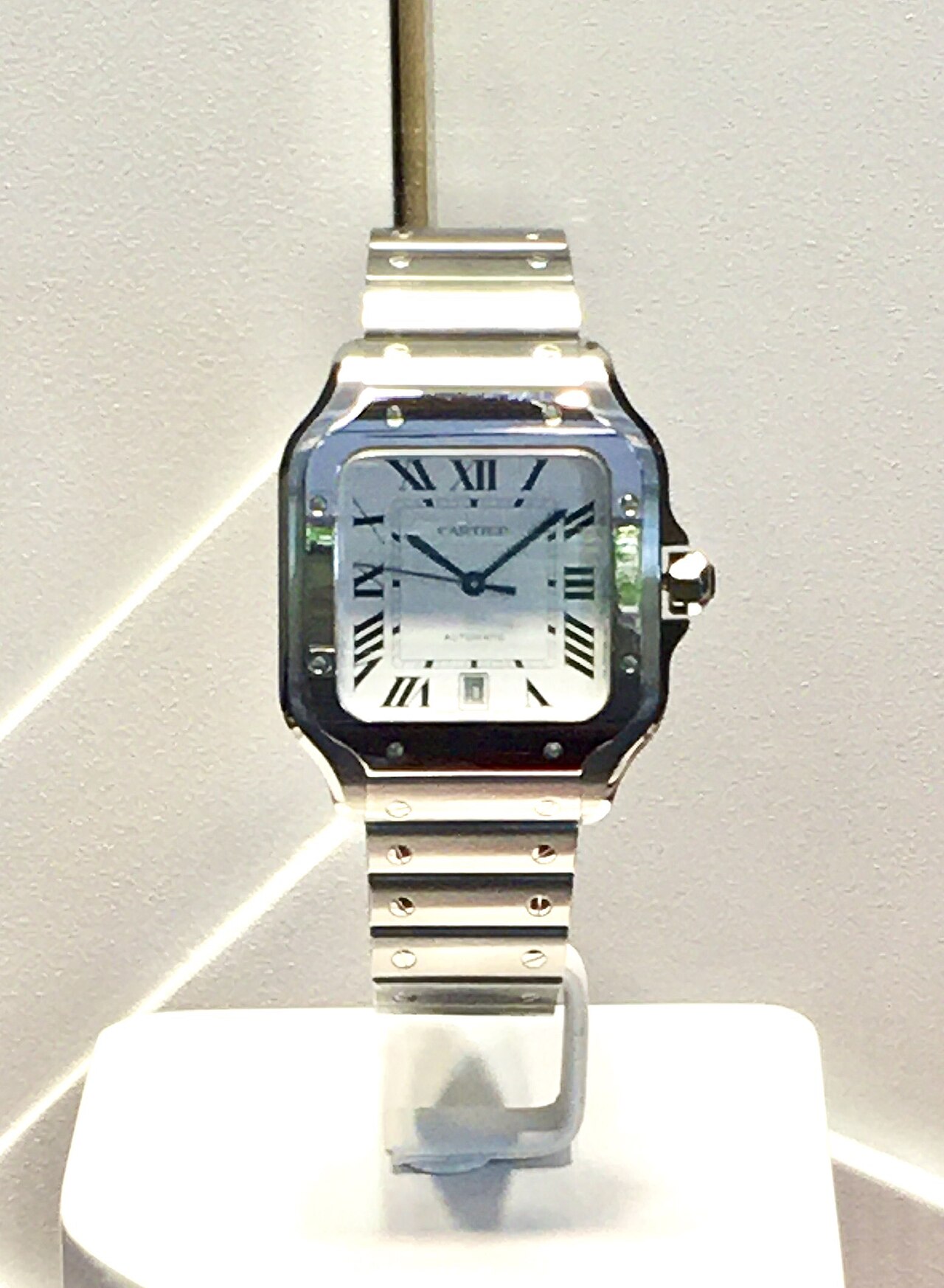
The Crash has always been more mythology than watchmaking. Tales of a client whose round timepiece melted in a car fire in London and inspired the asymmetric case have been told for decades, regardless of how true they are. Strip away the story and the Crash is a manually wound, time only watch shaped to within an inch of its life. What the new Squelette adds is an honest reason to look at the dial, because the dial is now a movement.
The calibre 1967 MC is built around a tiny mainspring barrel near twelve o clock and a balance wheel at six, with the path of power between them traced across a series of open worked bridges. The perimeter of the base plate is pierced in the form of Roman numerals from five through twelve, a tradition that goes back to the 2014 Crash skeleton. Where this new calibre departs is the hand hammered finish on the bridges, a dimpled motif said to take about two hours of work per movement. Cartier is not the first maison to attempt this kind of artisanal finish, but it is unusual to see it here, given that the brand has historically leaned on design rather than decoration to justify its prices.
Up close the hammered texture is uneven, which is the point. It catches light differently across each bridge and prevents the movement from reading as a flat, industrial product. Some of the bevels are polished to a surprising mirror finish, which contrasts nicely with the matte dimples. Less charming is the regulator, a fairly industrial Etachron type index with a small click that feels borrowed from a much cheaper watch. On a movement that asks you to read it as haute horlogerie, that detail sticks out.
The crown is repositioned closer to four o clock rather than the more conventional three, tucking the cabochon set crown into the concave flank of the case. It is a small change with a big effect, making the Crash feel even more organic and flowing than its predecessors. In platinum the watch carries real weight on the wrist for its compact footprint, and the slim burgundy alligator strap keeps the profile dainty. The platinum pin buckle is shaped in the same crashed form, comfortable though a small step down from the more elaborate folding clasp of prior editions.
Tank Normale, Subtle and the Better For It
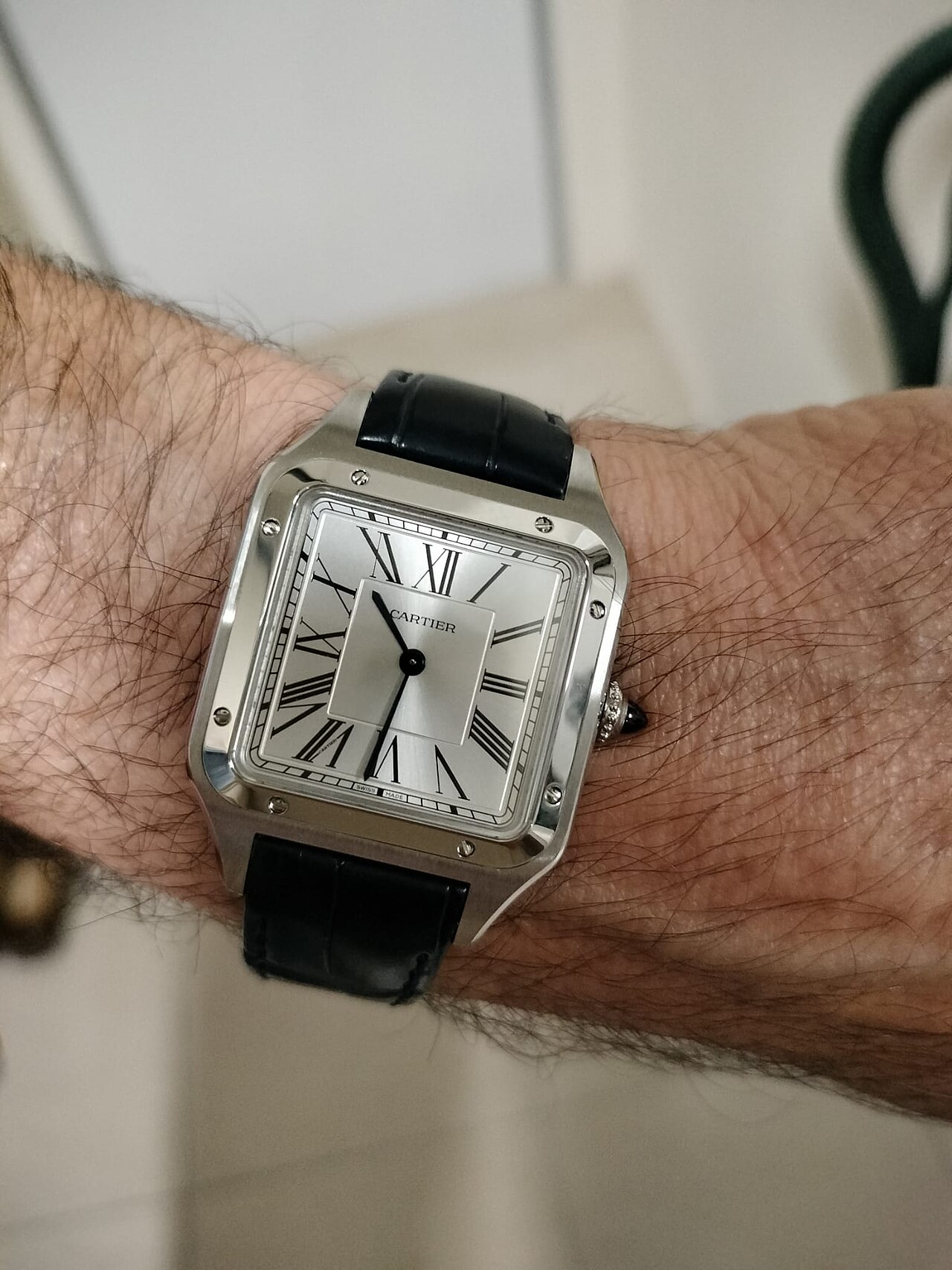
The Tank Normale in Les Opus livery is the least changed of the three, and that is precisely the point. The case is the same 32.6 millimetre by 25.7 millimetre rectangle that won the limited edition Tank Normale of 2023 so many fans, with the same seven link brick bracelet that is among the most comfortable in any platinum watch on the market today. The dial swaps to a silvered opaline finish with burgundy printing and, more importantly, blued steel sword hands instead of the rhodium plated hands of the earlier version. That single change dramatically improves legibility without compromising the vintage character.
What continues to impress is how a watch this small disappears on the wrist. The compact case and supple bracelet conspire to make the platinum feel like fabric, which is a strange and welcome sensation at this price point. The integrated folding clasp is hidden inside a dedicated groove in the bracelet, so four of the rows nearest the clasp are not removable. On a public street in Geneva no one would assume the watch was platinum, which for many collectors is the whole point.
The manually wound calibre 070 is hidden behind a solid case back, an unusual choice for a watch at this level but the right one here. A display back would break the vintage spell that the domed sapphire crystal is so carefully trying to cast. Crystal, dial, hands, and case all want to live in 1922, and the movement is content to let them.
Tortue Chronographe Monopoussoir, the Quiet Star
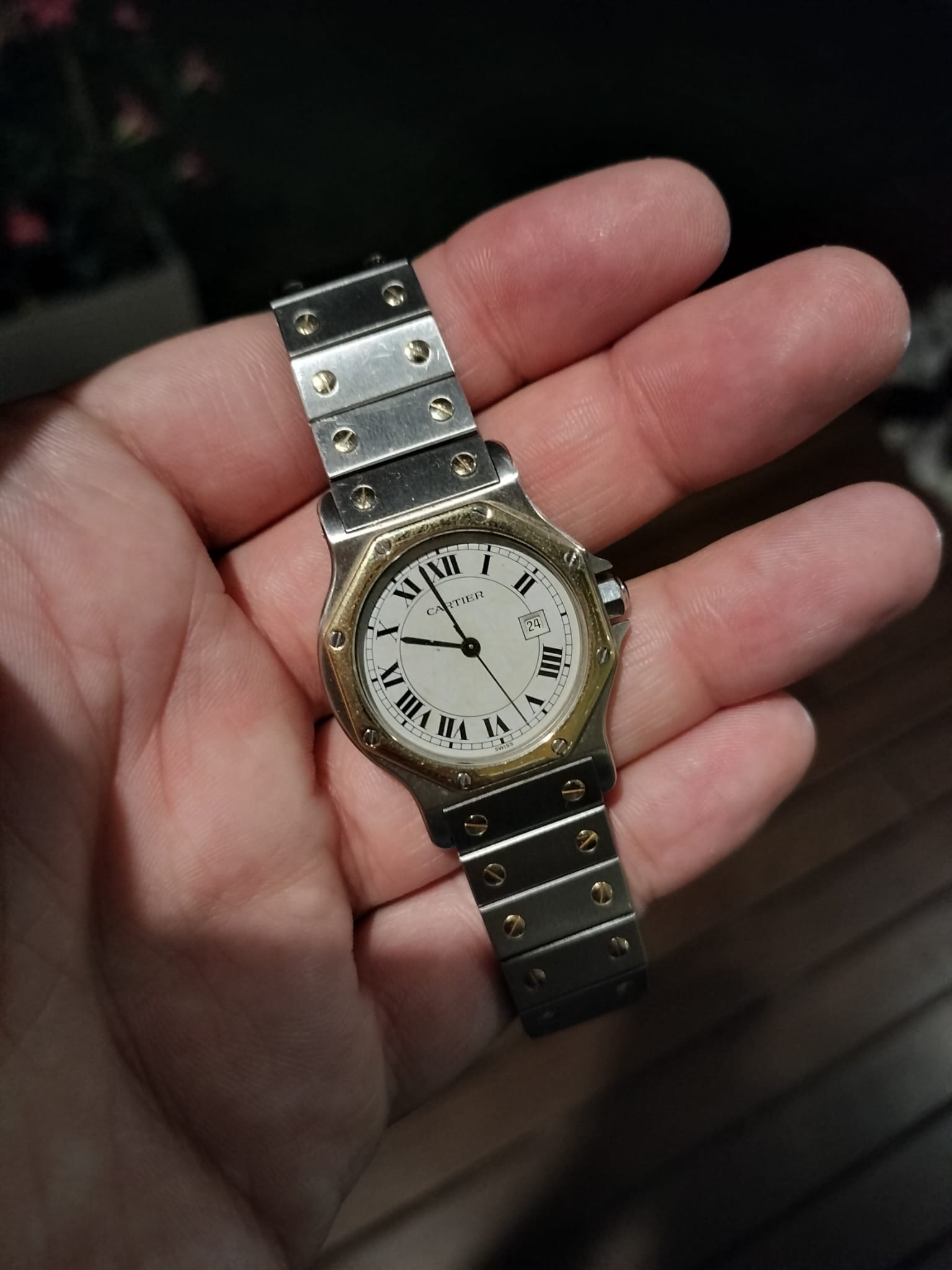
The Tortue Monopoussoir is the most technically interesting of the trio, even if it does not introduce a new calibre. The case shape dates to 1928, the dial layout with applied sphere markers and an oversized Roman XII echoes the original 1998 Collection Privée Cartier Paris Tortue Monopoussoir ref 2396, and the movement inside is the calibre 1928 MC that debuted in 2024. What changes is the dial colour treatment, now silvered with burgundy markings, and the absence of the Paris designation that was specific to the older CPCP series.
The calibre 1928 MC was developed with the help of Le Cercle des Horlogers, the independent collective that includes François Paul Journe, Vianney Halter, and Denis Flageollet. The architecture uses a horizontal clutch rather than the oscillating pinion of the older calibre 045 MC, and the chronograph runner has been refined since the prototypes shown two years ago. The result is a chronograph action that is reasonably crisp in operation, with an occasional stutter that comes with the horizontal clutch format. The wide diamond cut bevel on the chronograph bridge catches light beautifully, and the long slim tension springs, particularly the long jumper spring for the elapsed minutes wheel, give the movement a sense of lightness that its predecessor lacked.
Like the Crash, the Tortue is cased in platinum with a burgundy alligator strap and a platinum pin buckle. The case measures 43.7 by 34.8 millimetres and sits just 10.2 millimetres thick, which is a fraction of a millimetre slimmer than many chronographs in this price bracket. The single pusher is integrated cleanly into the crown at nine o clock, and the dial layout with its big XII gives the watch a strong c
haracter that is hard to mistake for anything else in the shop window.
A Note on Finishing and Value
Cartier is the only top ten luxury watchmaker, by revenue, with a substantial jewellery business, and it is also the only one whose value proposition rests primarily on design rather than movement finishing. Les Opus is a clear statement of that philosophy. The hand hammered bridges of the calibre 1967 MC are an interesting concession to the prevailing emphasis on decoration, but they do not turn Cartier into a movement led brand. The Etachron regulator still feels out of place, and the industrial finishes on the calibre 1928 MC are honest without being exceptional.
None of that is necessarily a problem. Cartier is selling a coherent vision of watchmaking, and the prices, which range from fifty three thousand euros for the Tortue to ninety seven thousand for the Crash Squelette, are calibrated to that vision. The Crash Squelette in particular is as much a piece of jewellery as it is a watch, and as such it competes with very few things on th
e market. The Tank Normale and the Tortue Monopoussoir, both unlimited, will be the more attainable options for collectors who want the platinum and burgundy look without the limited edition premium.
Specifications
| Reference | CRWHCH0012 Crash, CRWHTO0012 Tortue, CRWHTA0031 Tank Normale |
|---|---|
| Collection | Cartier Privé Les Opus, 10th anniversary |
| Case Material | Platinum 950 |
| Case Dimensions | Crash 45.34 mm by 25.18 mm, height 12.97 mm. Tortue 43.7 mm by 34.8 mm, height 10.2 mm. Tank Normale 32.6 mm by 25.7 mm, height 6.85 mm |
| Crystal | Sapphire, domed and slightly bevelled on the Tank Normale |
| Water Resistance | 30 metres for Crash and Tortue, not applicable for Tank Normale |
| Crash Movement | Calibre 1967 MC, manual wind, hours and minutes, 28,800 vph, hand hammered bridges |
| Tortue Movement | Calibre 1928 MC, manual wind, hours, minutes, small seconds, monopusher chronograph, 25,200 vph, 44 hour power reserve |
| Tank Normale Movement | Calibre 070, manual wind, hours and minutes, 25,200 vph, 38 hour power reserve |
| Dial | Silvered opaline with burgundy printing, blued steel sword hands on the Tank Normale and Tortue, open worked base plate with applied Roman numerals on the Crash Squelette |
| Bracelet or Strap | Matching seven link platinum bracelet on the Tank Normale. Burgundy alligator strap with platinum pin buckle on the Crash and Tortue |
| Limited Edition | Crash Squelette limited to 150 pieces. Tank Normale and Tortue Monopoussoir are regular production |
| Availability | At Cartier boutiques and authorised retailers from late 2026 |
| Price | Crash Squelette EUR 97,000 before taxes. Tank Normale EUR 58,000 before taxes. Tortue Monopoussoir EUR 53,000 before taxes |