In the serene valleys of the Swiss Jura Mountains, where precision meets artistry, few names evoke the timeless allure of horology quite like Blancpain. As the worlds oldest registered watch brand, Blancpain has woven a tapestry of innovation and craftsmanship that spans nearly three centuries.
Founded in a modest workshop amid rolling hills and whispering winds, this maison has not only survived the tides of time but has also shaped the very evolution of timekeeping. From humble pocket watches to groundbreaking dive instruments, Blancpains story is one of resilience, ingenuity, and an unwavering commitment to mechanical mastery.
This exploration delves into the brands origins, its pivotal historical strides, the inaugural timepiece that set the stage, and the rich array of models that have defined its legacy. For enthusiasts and collectors alike, understanding Blancpain offers a window into the soul of Swiss watchmaking.
The Origins of Blancpain A Humble Beginning in 1735
The tale of Blancpain begins in the quaint village of Villeret, nestled in the heart of Switzerlands Jura region, during the early 18th century. It was here, in 1735, that Jehan-Jacques Blancpain, a farmer with a keen eye for mechanics, registered himself as a watchmaker in the local records.
This simple act marked the birth of what would become a horological dynasty. Unlike many contemporaries who hailed from established guilds or urban workshops, Blancpain started from scratch. His initial endeavors were driven by necessity and curiosity, crafting rudimentary timepieces in a small family-run space that doubled as his home.
Jehan-Jacques approach was rooted in the agrarian rhythm of rural life. Villeret, with its sparse population and isolation from larger horological centers like Geneva, fostered a self-reliant spirit. He drew inspiration from the natural world around him, the steady tick of seasons mirroring the precision he sought in his creations.
Early Blancpain watches were not lavish affairs but functional tools, designed for farmers, merchants, and villagers who needed reliable companions for daily tasks. These pieces featured hand-forged components, often assembled with tools forged from local iron, emphasizing durability over ornamentation.
As word of his skill spread through the valleys, Jehan-Jacques passed the torch to his son, David, who expanded the workshop in the late 1700s. Under Davids stewardship, the brand began to incorporate subtle refinements, such as improved escapements borrowed from regional influences.
Yet, it was the familys dedication to in-house production that set Blancpain apart. From the outset, every gear and spring was made on-site, a practice that would endure through generations and become a hallmark of the brands integrity.
By the early 19th century, the Blancpain name had gained quiet renown. The Napoleonic Wars disrupted trade routes, but the familys adaptability shone through. They supplied timepieces to military officers and local nobility, honing their craft under pressure.
This era solidified Blancpains reputation for resilience, a trait that would prove invaluable in the turbulent years ahead. The origins in Villeret were more than a starting point; they embodied a philosophy of grounded excellence, where innovation stemmed from practical roots rather than fleeting trends.
Pioneering Milestones Blancpains Journey Through the Ages
Blancpains path from village artisan to global icon is punctuated by moments of bold innovation that redefined watchmaking. The 19th century brought expansion under the guidance of family heirs. In 1815, after Jehan-Jacques lineage faced internal shifts, Frederic-Louis Berthoud and Jean-Jacques Villeret assumed control, injecting fresh energy. They relocated the workshop to Le Brassus, a move that symbolized growth while honoring Villerets legacy. This period saw Blancpain embrace industrialization subtly, adopting steam-powered tools without sacrificing hand-finishing traditions.
A turning point arrived in 1832 when Blancpain ventured into wristwatches, predating the mainstream shift from pocket watches. This foresight catered to emerging lifestyles, particularly among women and professionals seeking discreet timekeeping. The brands early 20th-century strides were even more audacious.
In 1926, Blancpain unveiled the worlds first self-winding wristwatch, a marvel powered by the wearers natural motion. This automatic mechanism, with its oscillating weight, eliminated the need for manual winding, revolutionizing convenience and setting a precedent for future complications.
The 1929 introduction of a soft-iron inner case further showcased Blancpains problem-solving prowess. Designed to shield movements from magnetic fields a common foe in an electrifying industrial age this innovation enhanced accuracy in everyday use.
Just a year later, in 1930, the maison patented the first modern perpetual calendar wristwatch. This complex piece automatically adjusted for varying month lengths and leap years, a feat that blended astronomical knowledge with micro-engineering.
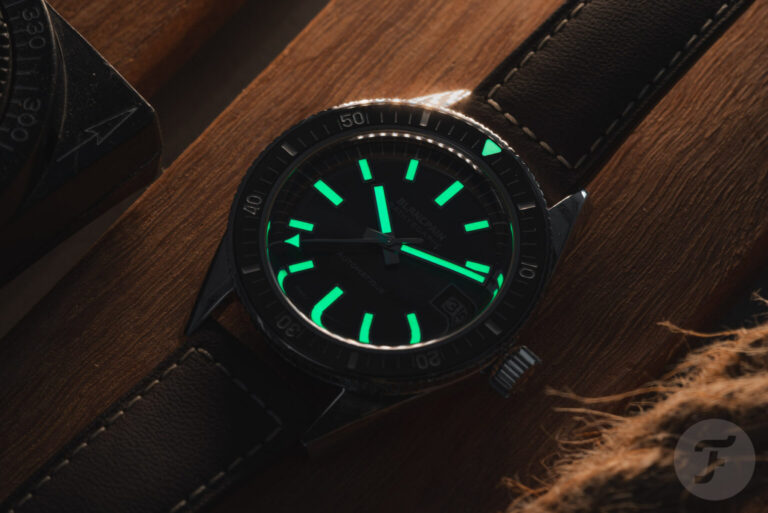
World War II tested the brands mettle, as resources dwindled and demand for utilitarian watches surged. Blancpain rose to the challenge, producing robust models for Allied forces. Post-war, the 1950s heralded a golden age. In 1953, the Fifty Fathoms debuted as the inaugural modern dive watch, commissioned by the French Navy and later adopted by the U.S. military. With its 91 meters water resistance, unidirectional bezel, and luminous markers, it became the blueprint for professional underwater timepieces.
The mid-1950s brought inclusivity with the 1956 Ladies Collection, featuring the smallest automatic movement ever for women at the time. This line blended delicacy with technical prowess, using ultra-thin components to fit slender wrists. Yet, the 1970s quartz crisis loomed large. As electronic alternatives flooded the market, Blancpain stubbornly clung to mechanical purity. By 1971, production halted entirely, the workshop falling silent for over a decade.
Revival came in 1983 under visionary Jean-Claude Biver, who acquired the dormant brand and infused it with renewed vigor. Backed by the Swatch Group, Biver emphasized heritage while pushing boundaries. The 1980s saw the launch of new-generation models with Frédéric Piguet movements, reaffirming Blancpains mechanical ethos. The 1991 1735 Grand Complication paid homage to the founding year, integrating tourbillon, perpetual calendar, and minute repeater in one opulent frame.
Entering the 21st century, Blancpain marked its 270th anniversary in 2005 with limited editions that celebrated core values. Today, under the Swatch Groups stewardship, the brand continues to innovate, from silicon balance springs to eco-friendly initiatives, all while preserving its Jura soul. These milestones are not mere dates but testaments to a maison that has danced with history, emerging stronger each time.
The Debut Masterpiece Blancpains First Timepiece
At the core of Blancpains lore lies its inaugural creation, a humble yet profound artifact born in 1735. Jehan-Jacques Blancpain did not set out to craft a luxury icon; his first watch was a straightforward pocket watch, forged in the fires of practicality. Constructed entirely by hand in his Villeret workshop, it featured a brass case etched with simple motifs inspired by local flora. The movement, a verge escapement with a fusee for constant force, ticked with the unpretentious reliability needed for rural life.
This debut piece measured about 50 millimeters in diameter, its dial marked with Roman numerals and a single subdial for hours and minutes. No seconds hand adorned it, reflecting the eras focus on essential timekeeping. The balance wheel, handmade from steel, oscillated at a modest rate, powered by a mainspring wound via a key. While rudimentary by modern standards, its construction demanded exquisite patience: gears cut by file, jewels drilled from natural rubies, and assembly under candlelight.
What elevated this first watch beyond utility was Jehan-Jacques signature, engraved on the case back a bold “J.J. Blancpain” that proclaimed ownership and pride. This personal touch foreshadowed the brands future emphasis on artisanal identity. Contemporaries praised its longevity; villagers recounted tales of these early pieces running flawlessly for decades with minimal servicing.
Though no surviving exemplar from 1735 exists, replicas and museum pieces evoke its essence. The original influenced subsequent generations, evolving into more refined vermil cases by the 1760s. It symbolized Blancpains ethos: time as a faithful servant, not a flashy adornment. In an industry now dominated by high-tech marvels, this debut reminds us that true excellence begins with simplicity and skill.
Evolution of Elegance Blancpains Diverse Collections Over Time
Blancpains repertoire has blossomed into a symphony of styles, each collection a chapter in its horological novel. From the brands nascent days, pocket watches dominated, featuring guilloche dials and repeater mechanisms for the elite. The shift to wristwatches in the 1830s introduced sleeker profiles, with leather straps and Arabic numerals for legibility.
The Villeret collection, launched in the 1980s revival, honors the founding village with ultra-thin dress watches. Models like the Villeret Ultra-Slim boast moon phases and date windows, encased in 40mm gold or platinum. These pieces exude understated luxury, with opaline dials and blued hands that catch the light like morning dew.
For those craving complexity, the Le Brassus line delivers. Named after the 1815 relocation site, it houses grand complications such as tourbillons and split-seconds chronographs. The Le Brassus Tourbillon Carrousel exemplifies this, with a rotating cage that counters gravity, all visible through a sapphire case back. Measuring 44mm, these watches appeal to connoisseurs who value engineering poetry.
No discussion of Blancpain omits the Fifty Fathoms, the dive watch that conquered depths since 1953. Evolving from military specs, modern iterations like the Fifty Fathoms Automatique offer 300 meters resistance and helium escape valves. With ceramic bezels and sailcloth straps, they blend vintage charm with contemporary robustness, available in 40mm steel cases.
The Air Command collection, revived in 2019, pays tribute to 1950s aviation prototypes. These chronographs feature flyback functions and tachymeters, evoking cockpit precision. The 42.5mm case houses the F185 caliber, with a flyback chronograph that resets on the fly for pilots split-second needs.
Womens watches found a home in the expanded Ladies Collection post-1956. Today, it includes gem-set models with quartz-avoiding automatics, like the Villeret Quantième Lunaire with diamond bezels and silk threads woven into dials for a tactile allure.
Throughout, Blancpain has championed in-house calibers, from the 1150 in dive models to the 6654 in perpetual calendars. Materials range from red gold to titanium, finishes from sunburst to flinissage. Limited editions, such as the 2023 Tribute to Fifty Fathoms, commemorate milestones with unique engravings.
This diversity underscores Blancpains adaptability: classic for boardrooms, rugged for adventures, complicated for virtuosos. Each line traces back to 1735s spirit, ensuring the brands evolution feels like a natural progression rather than reinvention.
In reflecting on Blancpains odyssey, one sees a brand that has not just marked time but mastered it. From Jehan-Jacques solitary bench to global ateliers, its legacy endures as a beacon of authentic horology. As collectors seek pieces that whisper stories, Blancpain stands eternal, a testament to the beauty of what lasts.